Chernobyl Part 2
©Terry R. Thomas/www.nature-track.com
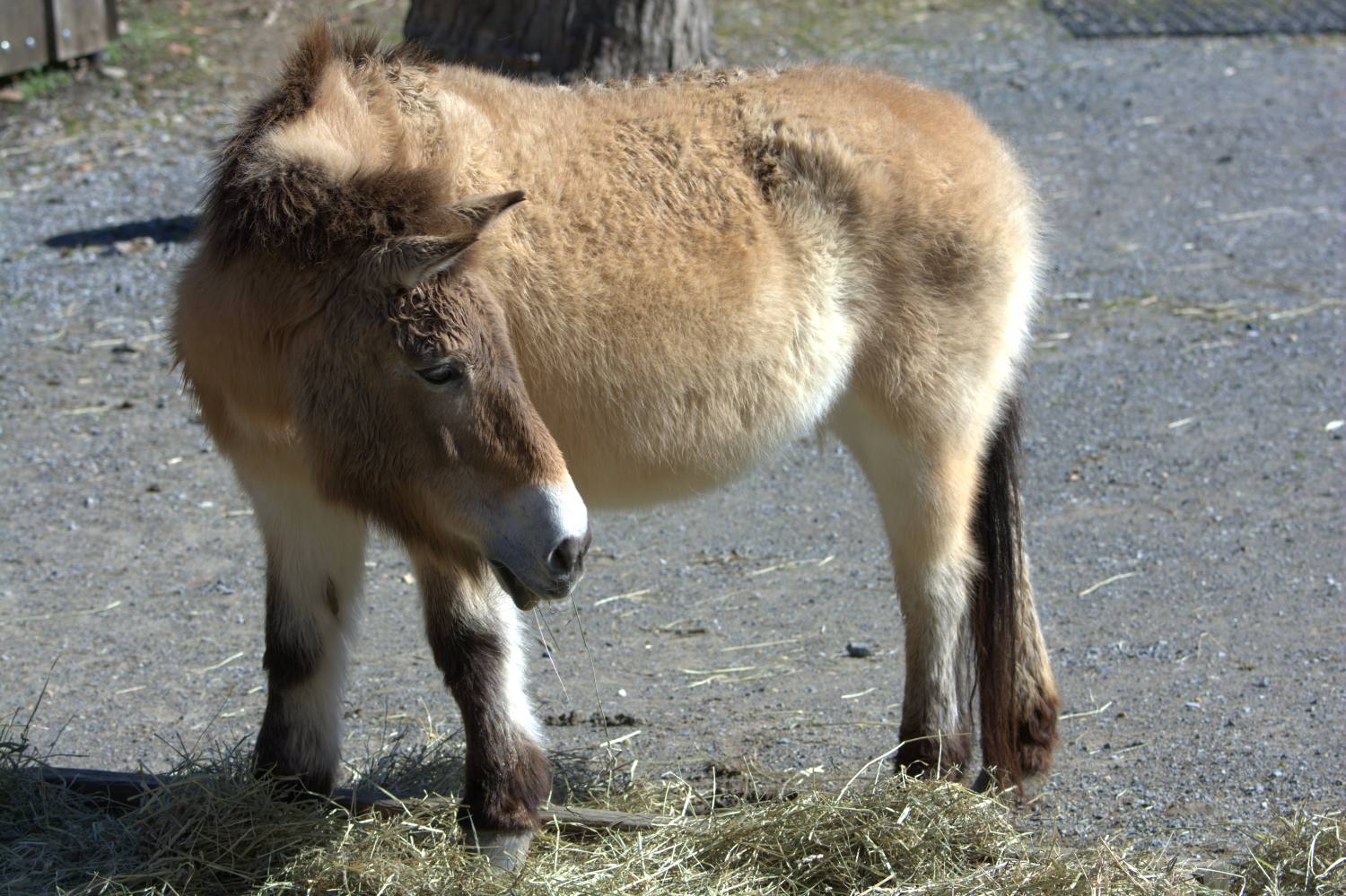
Przewalski’s horse (shown here at the National Zoo, Washington, DC) is a species that actually benefitted from the Chernobyl nuclear disaster and the formation of a wildlife sanctuary without humans.
Just because animals and plants are returning to the Chernobyl nuclear accident site, it does not mean that there were no wildlife consequences from the ionizing radiation, especially in the areas that were impacted the most by the fallout. Researchers found that, just like atomic bomb survivors, some animals subjected to high radiation in the most contaminated areas suffer, even today, from increased cataracts, smaller brains, malformed sperm and sterility in males. Some birds in high radiation areas also develop obvious tumors.
Although comparative catastrophes are thankfully rare, another nuclear accident, considered the second largest nuclear disaster (behind Chernobyl) occurred at the Fukushima nuclear power plant in Japan. On March 11, 2011, a 9.0 MW earthquake shook the area just before three p.m. disrupting power to the plant and initiating the use of emergency generators to cool the reactors. Forty minutes later, a 15-meter-high tsunami breached the seawalls around the plant and drowned the generators. With no way to cool the reactors, meltdown followed, starting about 14 hours after the tsunami. Ultimately, about 380,000 people were evacuated from an affected area of approximately 232 square miles. While some of the people were allowed to return in 2015 to areas deemed safe, the exclusionary zone is still around 143 square miles.
Numbers of birds and numbers of species of birds in the most heavily radioactive areas around Fukushima declined rather quickly, and according to one researcher, the effects of radiation in these highly contaminated areas are growing even while the contamination is slowly decreasing.
Even cattle, horses, and sheep that were evacuated from the Chernobyl area were sickened by the radiation and their offspring suffered severe mutations for several years. No one tracked the wildlife and pets left on site, but it is reasonable to assume that they suffered similar fates for a time.
All of this is expected. Radiation is nasty stuff and it is no surprise that animals subjected to high doses are going to suffer. What is interesting though, is that while these consequences occurred at first, and may continue in the most affected areas, there are positives that were unexpected.
For instance, there have been a few physiologic or genetic changes. The offspring of the dogs left behind by their owners in Pripyat have changed and are now considered genetically distinct from other dogs. The Eastern tree frog, normally bright green, is almost black within the CEZ. This is a result of increased melanin, known to help shield cells from radiation damage. Likely, darker skinned frogs survived better and they rapidly shifted toward a darker skinned race by passing on this gene. One study of 16 bird species in the CEZ “found that with increasing background radiation, birds actually had higher levels of antioxidants (like glutathione) and less oxidative stress, suggesting their physiology has adjusted to cope with chronic low-dose radiation.”
At both Chernobyl and Fukushima, people were banished, but the area did not become an inhospitable wasteland. Wolves, wild boar, Eurasian lynx, deer, moose and more in the Chernobyl Exclusionary Zone, and wild boar, Japanese hares, Japanese macaques, pheasants, Japanese marten, foxes, and raccoon dogs at the Fukushima site all have increased in population size and distribution within the exclusion zones. In the CEZ, this has become so apparent that the area has been used to help recover two endangered species, Przewalski’s horses and European bison, to a natural environment. At one time, both were extinct in the wild and are now prospering in the CEZ.
Researcher James Beasley (University of Georgia) and his colleagues have studied this rewilding at both sites and found that many animals were living and even thriving in highly contaminated areas. “We found a whole variety of species, and really what was driving their distribution was habitat,” says Beasley. “It had nothing to do with radiation levels on the ground.” Beasley concluded with, “When (humans) move into an area, animals don’t immediately disappear—it happens over time. What happened at Chernobyl and Fukushima are environmental and human tragedies. But in the aftermath, these landscapes have become living laboratories where we have the unique opportunity and responsibility to better understand the effects of radiological contamination, as well as what happens when the humans move out and wildlife are allowed to repopulate at their own pace.”
If I were writing a textbook for wildlife management on this subject, I could not help but conclude the book with this statement: wildlife can find a way if humans just make a little room for them.
Help Idaho Wildlife
When we traveled across the state in October 2017, we visited most of the Idaho Department of Fish and Game wildlife management areas. Most of the vehicles we saw using the wildlife management areas did not have wildlife plates. Buying wildlife plates is a great way for non-hunters and hunters alike to support wildlife-based recreation like birding.
C'mon folks, let's help Idaho's wildlife by proudly buying and displaying a wildlife license plate on each of our vehicles!
See below for information on Idaho plates. Most states have wildlife plates so if you live outside Idaho, check with your state's wildlife department or vehicle licensing division for availability of state wildlife plates where you live.
And tell them that you heard about it from Nature-track.com!
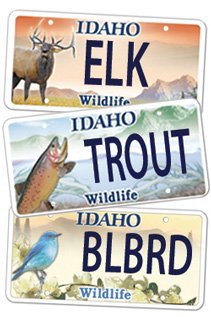
Wildlife License Plates
Great news! as of 2024, there are three NEW designs for license plates. They still are bluebird, cutthroat trout and elk, but they are beautiful.
Idaho Wildlife license plates provide essential funding that benefits the great diversity of native plants and wildlife that are not hunted, fished or trapped—over 10,000 species or 98% of Idaho’s species diversity. Game species that share the same habitats (such as elk, deer, antelope, sage-grouse, salmon, trout) also benefit from these specialty plates.
No state tax dollars are provided for wildlife diversity, conservation education and recreation programs. Neither are any revenues from the sale of hunting or fishing licenses spent on nongame species. Instead, these species depend on direct donations, federal grants, fundraising initiatives—and the Idaho Wildlife license plates.
Both my vehicles have Bluebird Plates. I prefer the bluebird because the nongame program gets 70 percent of the money from bluebird plates, but only 60 percent of the money from elk and trout plates - 10 percent of the money from elk plates supports wildlife disease monitoring and testing programs (to benefit the livestock industry) and 10 percent from cutthroat plates supports non-motorized boat access.
Incidentally, in 2014, the Idaho Legislature denied the Department of Fish and Game the ability to add new plates or even to change the name of the elk and cutthroat plates (very specific) to wildlife and fish plates, a move that would have allowed for changing images occasionally and generating more revenue. It would seem that they believe that we Idahoans don't want a well funded wildlife program.
I think it is time we let the Legislature know that Idahoan support wildlife funding and that we would like to see these generic plates come to fruition.
"WOW. What a phenomenal piece you wrote. You are amazing." Jennifer Jackson
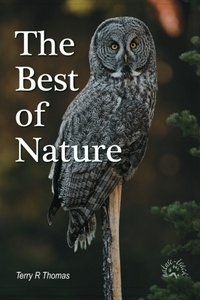
That is embarrassing, but actually a fairly typical response to my nature essays. Since The Best of Nature is created from the very best of 16 years of these nature essays published weekly in the Idaho Falls Post Register (online readership 70,000), it is a fine read. It covers a wide variety of topics including humorous glimpses of nature, philosophy, natural history, and conservation. Readers praise the style, breadth of subject matter and my ability to communicate complex and emotional topics in a relaxed and understandable manner.
Everyone can find something to love in this book. From teenagers to octogenarians, from the coffee shop to the school room, these nature essays are widely read and enjoyed.
Some of the essays here are my personal favorites, others seemed to strike a chord with readers. Most have an important message or lesson that will resonate with you. They are written with a goal to simultaneously entertain and educate about the wonderful workings of nature. Some will make you laugh out loud and others will bring a tear to the eye and warm your heart.
Readers Write:
"You hit a home run with your article on, Big Questions in Nature. It should be required reading for everyone who has lost touch with nature...great job!" Joe Chapman
"We enjoyed your column, Bloom Where Planted. Some of the best writing yet. The Post Register is fortunate to have your weekly columns." Lou Griffin.
To read more and to order a copy, click here or get the Kindle version
Copies are also available at:
Post Register
Island Park Builders Supply (upstairs)
Barnes and Noble in Idaho Falls
Harriman State Park, Island Park
Museum of Idaho
Valley Books, Jackson Wyoming
Avocet Corner Bookstore, Bear River National Wildlife Refuge, Brigham City, Utah
Craters of the Moon National Monument Bookstore, Arco, Idaho