Mirrorless Cameras—Worth the Money?

F9, 1/2000, ISO 5000, 20 frames per second. With the push of a button, I went from photographing a squirrel on the ground with a slow shutter speed and low ISO at 10 frames per second, to capturing this image of a broad-billed hummingbird inflight.
I was on a dock next to another photographer photographing a pied-billed grebe. As photographers often do, I asked him which camera he was using. “Nikon D500” he replied. That was a camera with a good reputation, but now somewhat dated. I asked if he was considering a move to a mirrorless camera and his answer was an emphatic no. He was mobility limited and on a fixed income and a new camera just wasn’t in the budget. I looked down at the $4,000 Nikon Z8 that I was shooting. I understood exactly where he was coming from because I had made the same statement a few years ago. As much as the money, I didn’t want to have to learn a new and dramatically different camera system.
After discovering the differences though, I finally realized that the benefits of a mirrorless system were huge. Just as the Kodak Brownie camera brought photography to the masses (it cost $1 in 1900), just as the Single Lens Reflex or SLR camera with its moveable mirror changed photography again, and just as digital surpassed film in nearly every way, and making photography ever more accessible, mirrorless has changed photography forever.
The basic premise of an SLR camera is that you can look through the viewfinder and see exactly what the lens sees because you are looking through the lens itself. Before that, there were two lenses—one you looked through and one that actually exposed the film when the shutter was released. And that was the problem—the two didn’t always line up and photographers had to adjust for this difference, which was called parallax. A mirror system inside the camera solved that with one little problem left behind. The mirror had to move out of the way in order to expose the film or sensor. This caused mirror shake at slow speeds and basically slowed down the entire system, limiting frames per second, for instance. If only we could get rid of that dang mirror…
With the advent of the mirrorless camera, we can still look through the lens and see exactly what it is seeing but the other challenges of the mirror are gone and that opens up a new world to the photographer.
For instance, the photographer I was talking to could shoot as many as five frames per second in ideal conditions. My standard rate on the Z8 is double that, but I can choose 20 frames per second if conditions allow and even 30 fps if I am willing to shoot JPG instead of the native RAW. Twenty frames per second allows me to capture multiple wing positions of a hummingbird if I set the shutter speed at least 1/2000 second. That is significant.
Another advantage of a mirrorless camera is the programmability. I admit that I have barely gotten beneath the surface on this one. However, one thing I have done is program a button on the front of my camera to be my action button. With the press of that button, I change my settings to a wide-open aperture, a shutter speed of 1/2000 second, auto ISO and jump from 10 to 20 frames per second. I can go from shooting a scenic to flying birds with the press of a button.
The mirrorless system I use employs the latest memory card called CF Express Type B. This new card is fast enough to keep up with the 30 frames per second and downloading to the computer can be measured in seconds rather than trips to the refrigerator.
There are many other options available because of the mirrorless system. Between my camera body and lens, I now have five stops of vibration reduction instead of the two stops offered by my Nikon D810. Autofocus is also amazing. It will track an animal’s eye and keep it sharp even if you or the subject is moving, and it has many more options.
One last example is called pre and post capture. With this feature turned on, if I depress the shutter part way the camera will capture images before and after I fully depress the shutter (up to two seconds on either side). What good is that, you might ask. Well, if I am waiting for a bird to fly, my reflexes are usually just a bit slow when it does. With pre-post capture, I actually can get images from before I pressed the shutter and after I let it up, increasing my chances for the perfect image.
All in all, I have found the mirrorless camera to be nearly the magnitude of jump in technology that we had when digital replaced the film age. As a wildlife/nature photographer, I have not regretted making the switch. Rather, it has upped my game dramatically.
Help Idaho Wildlife
When we traveled across the state in October 2017, we visited most of the Idaho Department of Fish and Game wildlife management areas. Most of the vehicles we saw using the wildlife management areas did not have wildlife plates. Buying wildlife plates is a great way for non-hunters and hunters alike to support wildlife-based recreation like birding.
C'mon folks, let's help Idaho's wildlife by proudly buying and displaying a wildlife license plate on each of our vehicles!
See below for information on Idaho plates. Most states have wildlife plates so if you live outside Idaho, check with your state's wildlife department or vehicle licensing division for availability of state wildlife plates where you live.
And tell them that you heard about it from Nature-track.com!
Wildlife License Plates
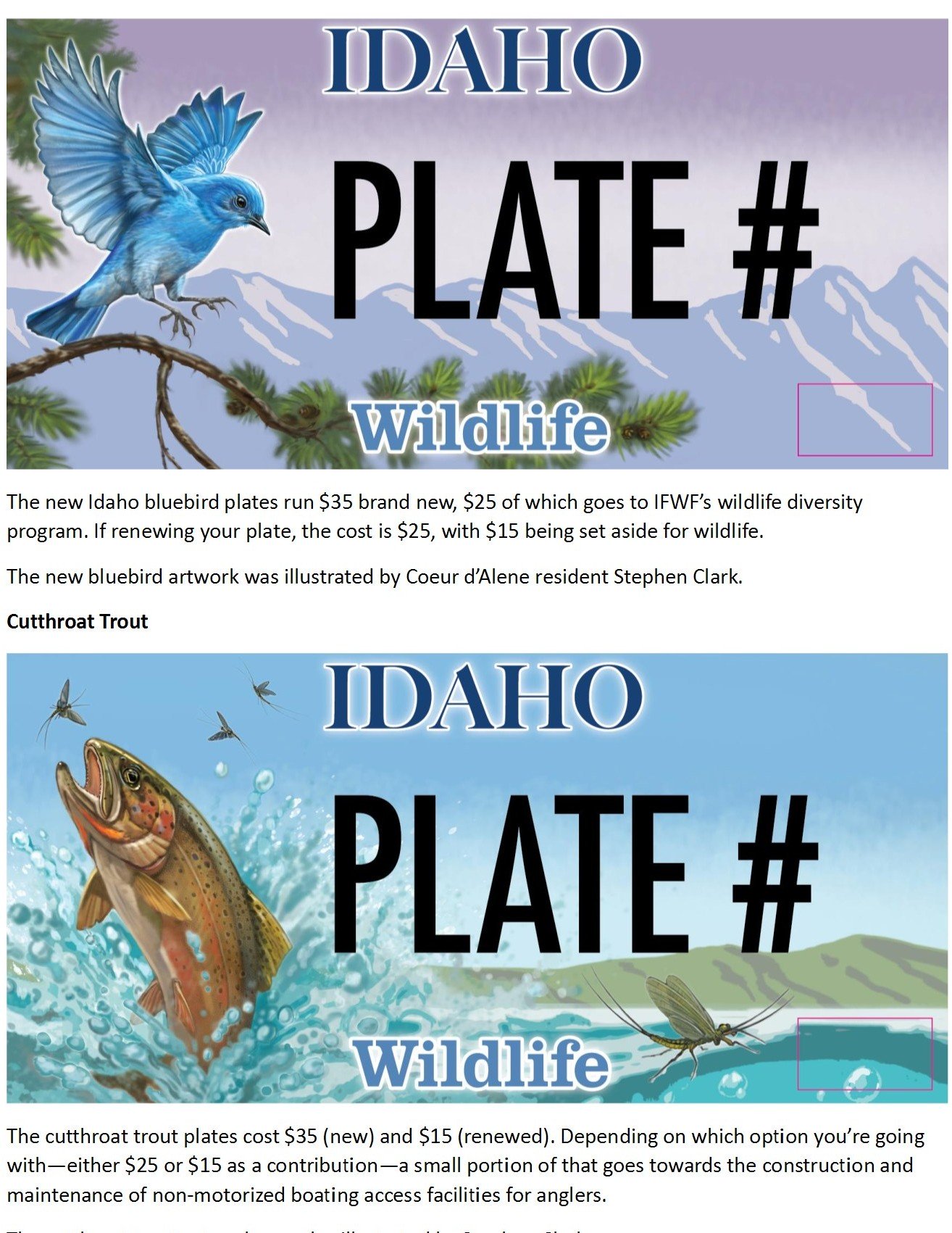
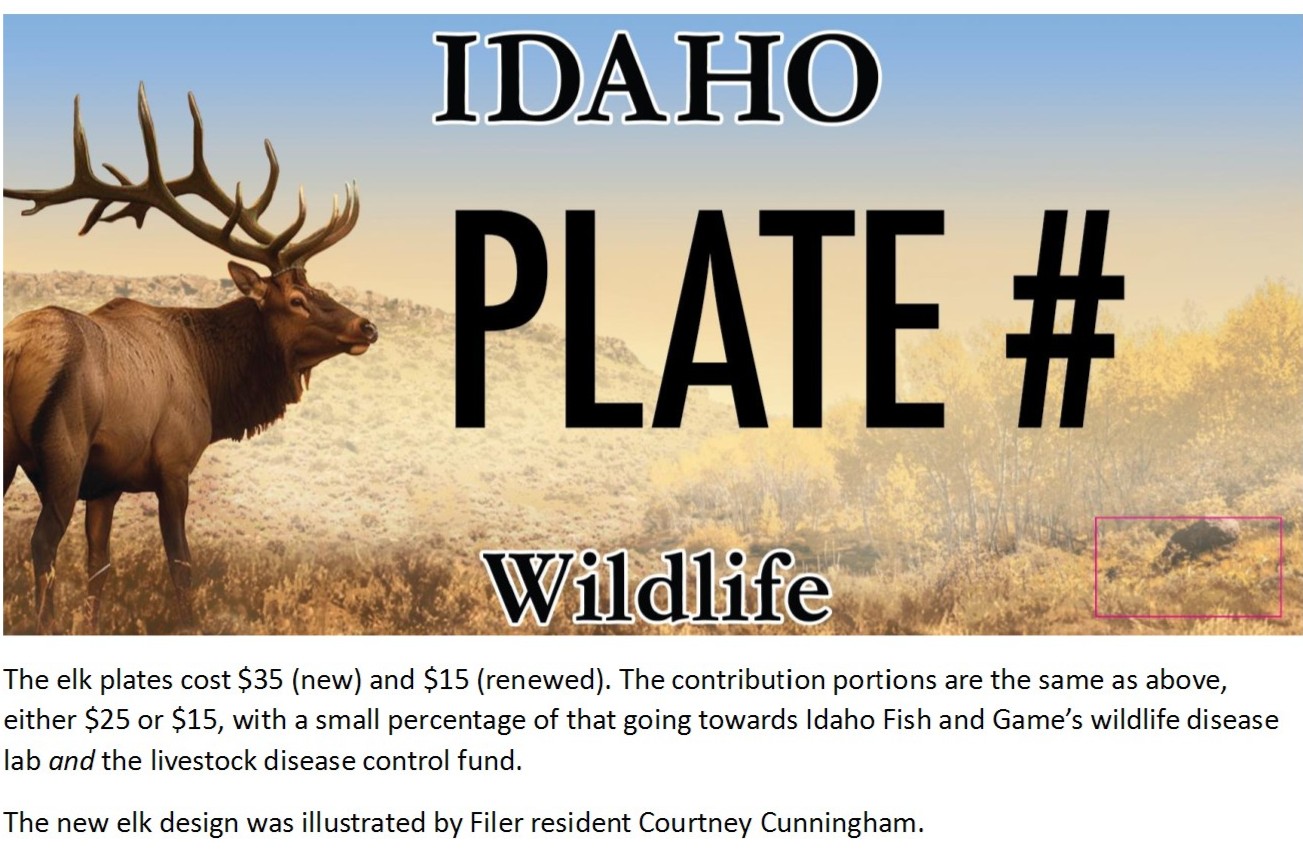
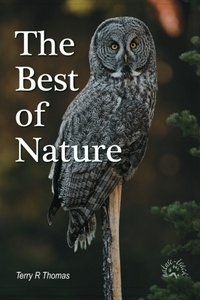
Great news! as of 2024, there are three NEW designs for license plates. They still are bluebird, cutthroat trout and elk, but they are beautiful.
Idaho Wildlife license plates provide essential funding that benefits the great diversity of native plants and wildlife that are not hunted, fished or trapped—over 10,000 species or 98% of Idaho’s species diversity. Game species that share the same habitats (such as elk, deer, antelope, sage-grouse, salmon, trout) also benefit from these specialty plates.
No state tax dollars are provided for wildlife diversity, conservation education and recreation programs. Neither are any revenues from the sale of hunting or fishing licenses spent on nongame species. Instead, these species depend on direct donations, federal grants, fundraising initiatives—and the Idaho Wildlife license plates.
Both my vehicles have Bluebird Plates. I prefer the bluebird because the nongame program gets 70 percent of the money from bluebird plates, but only 60 percent of the money from elk and trout plates - 10 percent of the money from elk plates supports wildlife disease monitoring and testing programs (to benefit the livestock industry) and 10 percent from cutthroat plates supports non-motorized boat access.
Incidentally, in 2014, the Idaho Legislature denied the Department of Fish and Game the ability to add new plates or even to change the name of the elk and cutthroat plates (very specific) to wildlife and fish plates, a move that would have allowed for changing images occasionally and generating more revenue. It would seem that they believe that we Idahoans don't want a well funded wildlife program.
I think it is time we let the Legislature know that Idahoan support wildlife funding and that we would like to see these generic plates come to fruition.
"WOW. What a phenomenal piece you wrote. You are amazing." Jennifer Jackson
That is embarrassing, but actually a fairly typical response to my nature essays. Since The Best of Nature is created from the very best of 16 years of these nature essays published weekly in the Idaho Falls Post Register (online readership 70,000), it is a fine read. It covers a wide variety of topics including humorous glimpses of nature, philosophy, natural history, and conservation. Readers praise the style, breadth of subject matter and my ability to communicate complex and emotional topics in a relaxed and understandable manner.
Everyone can find something to love in this book. From teenagers to octogenarians, from the coffee shop to the school room, these nature essays are widely read and enjoyed.
Some of the essays here are my personal favorites, others seemed to strike a chord with readers. Most have an important message or lesson that will resonate with you. They are written with a goal to simultaneously entertain and educate about the wonderful workings of nature. Some will make you laugh out loud and others will bring a tear to the eye and warm your heart.
Readers Write:
"You hit a home run with your article on, Big Questions in Nature. It should be required reading for everyone who has lost touch with nature...great job!" Joe Chapman
"We enjoyed your column, Bloom Where Planted. Some of the best writing yet. The Post Register is fortunate to have your weekly columns." Lou Griffin.
To read more and to order a copy, click here or get the Kindle version
Copies are also available at:
Post Register
Island Park Builders Supply (upstairs)
Barnes and Noble in Idaho Falls
Harriman State Park, Island Park
Museum of Idaho
Valley Books, Jackson Wyoming
Avocet Corner Bookstore, Bear River National Wildlife Refuge, Brigham City, Utah
Craters of the Moon National Monument Bookstore, Arco, Idaho