Deceiving with Statistics
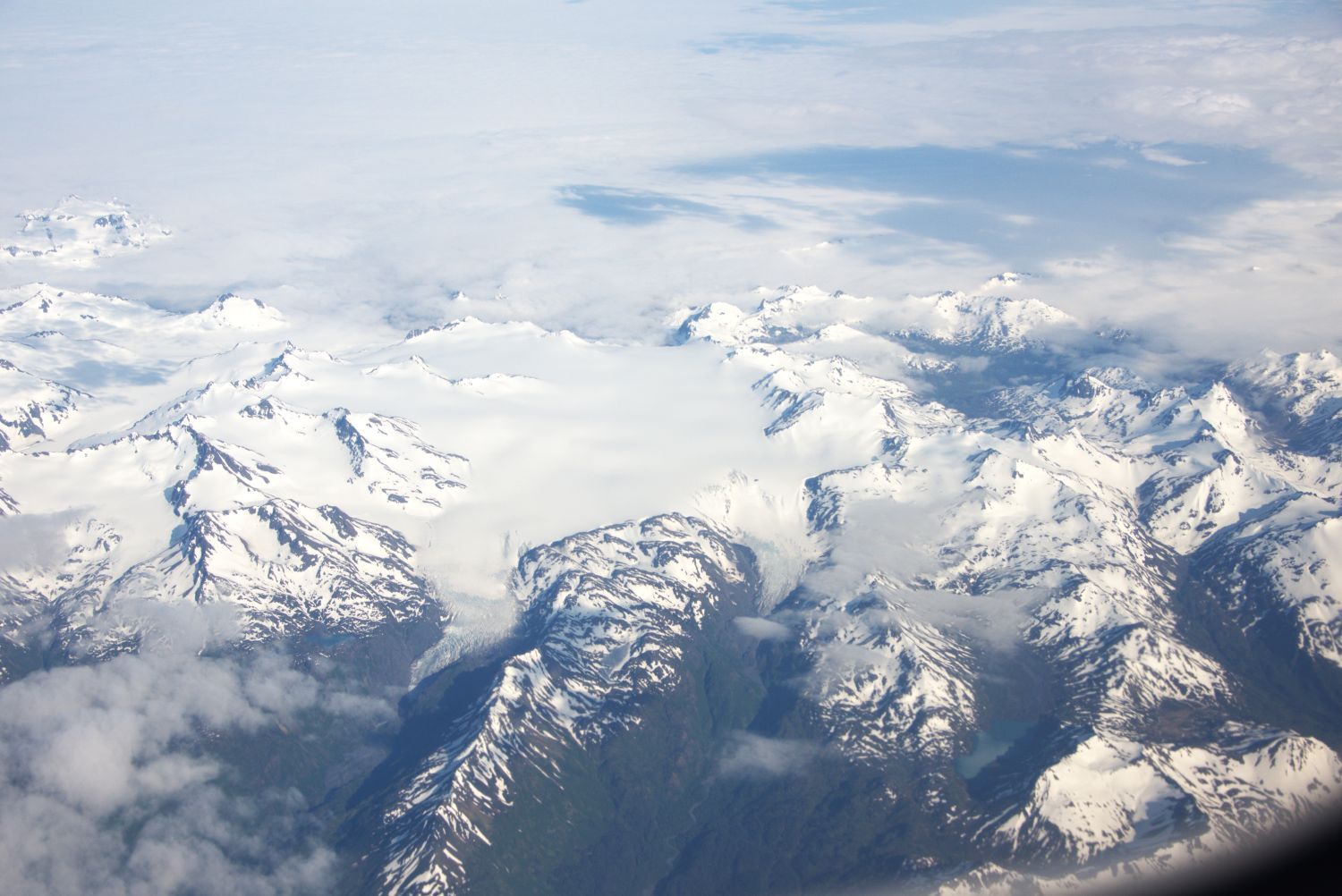
The Alaska coastline is indeed a vast wilderness, but it is comprised mostly of rock, snow and ice and will not be habitat for man or beast for thousands of years. To include it in calculations of wilderness acres is disingenuous.
A friend and I were in a discussion one day about the need, or not, to preserve habitat. At one point, to “prove” that humans in this country were not having the impact that conservationists were saying, he stated a “fact” that went something like this: if we took all the people in this nation and gave them each a half-acre of ground to live on, we would barely fill the state of Texas. That is actually true at this point in the population of the country. Texas has about 171 million acres and there are 342 million citizens. So, not allowing for roads, shopping and business centers, sidewalks, farms, ranches, mining, oil extraction, timber production, airports, manufacturing, parks, recreation facilities, and all the other things that our society needs to function, we could do this very thing and each have our own half-acre. I personally would insist on being on the outer edge though, and would feel very sorry for a person in the middle where it would be 400 miles in any direction to get to the rest of the country or the coast. He or she would have to get permission from 166,400 neighbors in order to get to an edge.
The argument made no sense at all since that isn’t the way that we actually live on the land. It is a phony statistic. Like most phony statistics, it does contain an element of truth, but the reasoning about what it means is faulty to the extreme.
This is but one example of the faulty reasoning often used when people discuss nature and our impact upon it. I was reminded of this as I flew from Seattle to Anchorage last week. I intentionally chose a window seat on the east facing side of the airliner so I could photograph the vast uninhabited coastline. For miles inland, snow-covered terrain stretched out in a huge wilderness. As I marveled at this immense chunk of empty land, I realized just how easy it would be for someone to use it as part of a phony statistic to point out just how much wild land is left on this continent.
For this land to be included in any calculation of true wilderness would be disingenuous though. It is a large enough area to sway an argument with someone who is unaware of what the area is actually comprised of—snow, glaciers, and rock.
It is uninhabited because it is not just remote, but unlivable, and not just by people. Neither wildlife nor plants can live there in any significant numbers because the area is just too reminiscent to the recent end of the Ice Age (13,000 years ago). Even with a warming planet, it may take thousands of years before this vast interior becomes anything close to habitat for wildlife or of interest to even a burgeoning human population.
What it shows us is that “statistics”, while essential to science of any sort, can still be used to lie, confound, and distort truth or attempts to find it. When used dishonestly or by people who do not understand what they are saying, statistical comparisons are at best junk science and at worst outright lies.
In these days of AI, political rancor, intense pressure from greedy individuals, and public land grabs, it will behoove us all to carefully examine claims made by either side and to look for how we are being manipulated with “data” that really isn’t.
Help Idaho Wildlife
When we traveled across the state in October 2017, we visited most of the Idaho Department of Fish and Game wildlife management areas. Most of the vehicles we saw using the wildlife management areas did not have wildlife plates. Buying wildlife plates is a great way for non-hunters and hunters alike to support wildlife-based recreation like birding.
C'mon folks, let's help Idaho's wildlife by proudly buying and displaying a wildlife license plate on each of our vehicles!
See below for information on Idaho plates. Most states have wildlife plates so if you live outside Idaho, check with your state's wildlife department or vehicle licensing division for availability of state wildlife plates where you live.
And tell them that you heard about it from Nature-track.com!
Wildlife License Plates
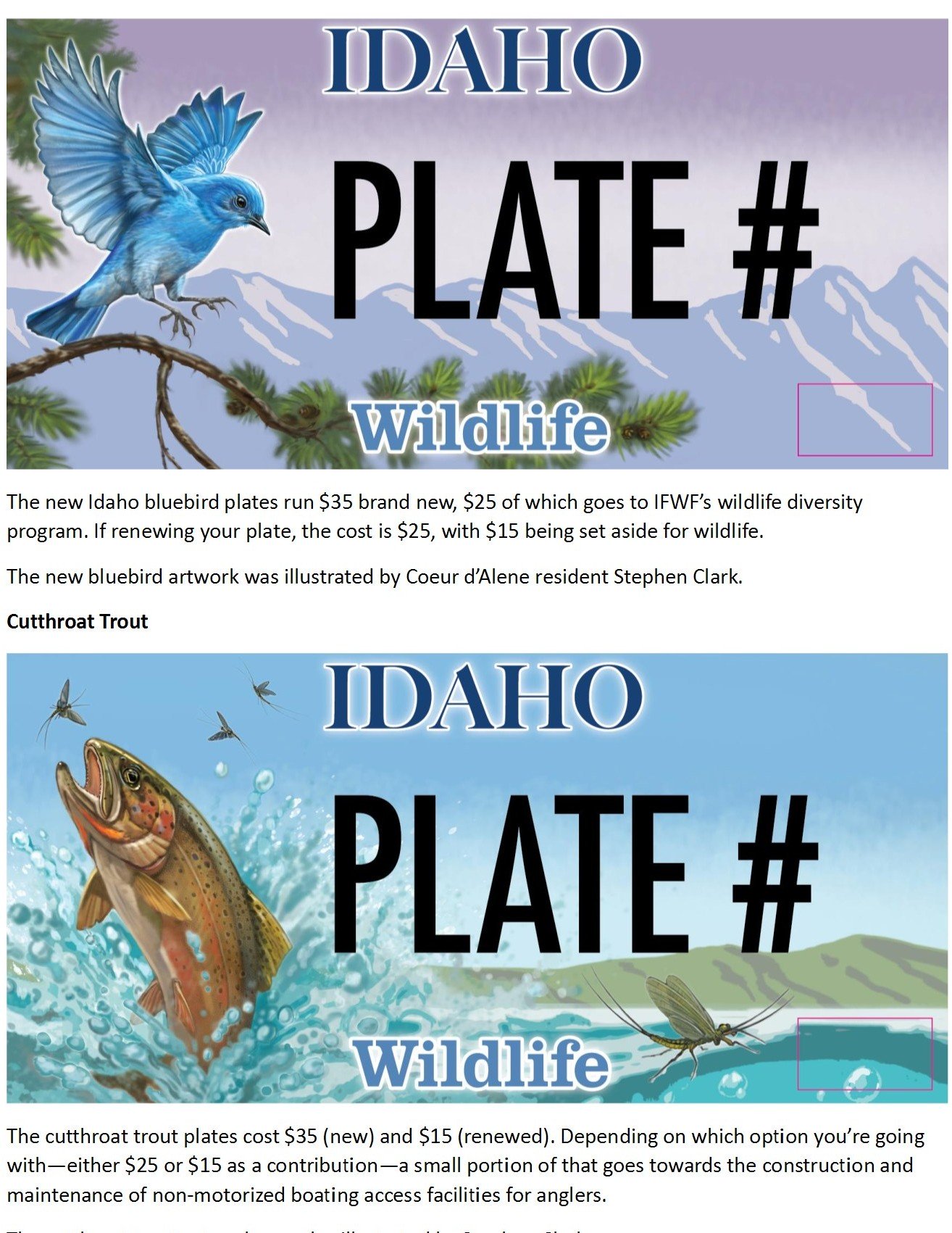
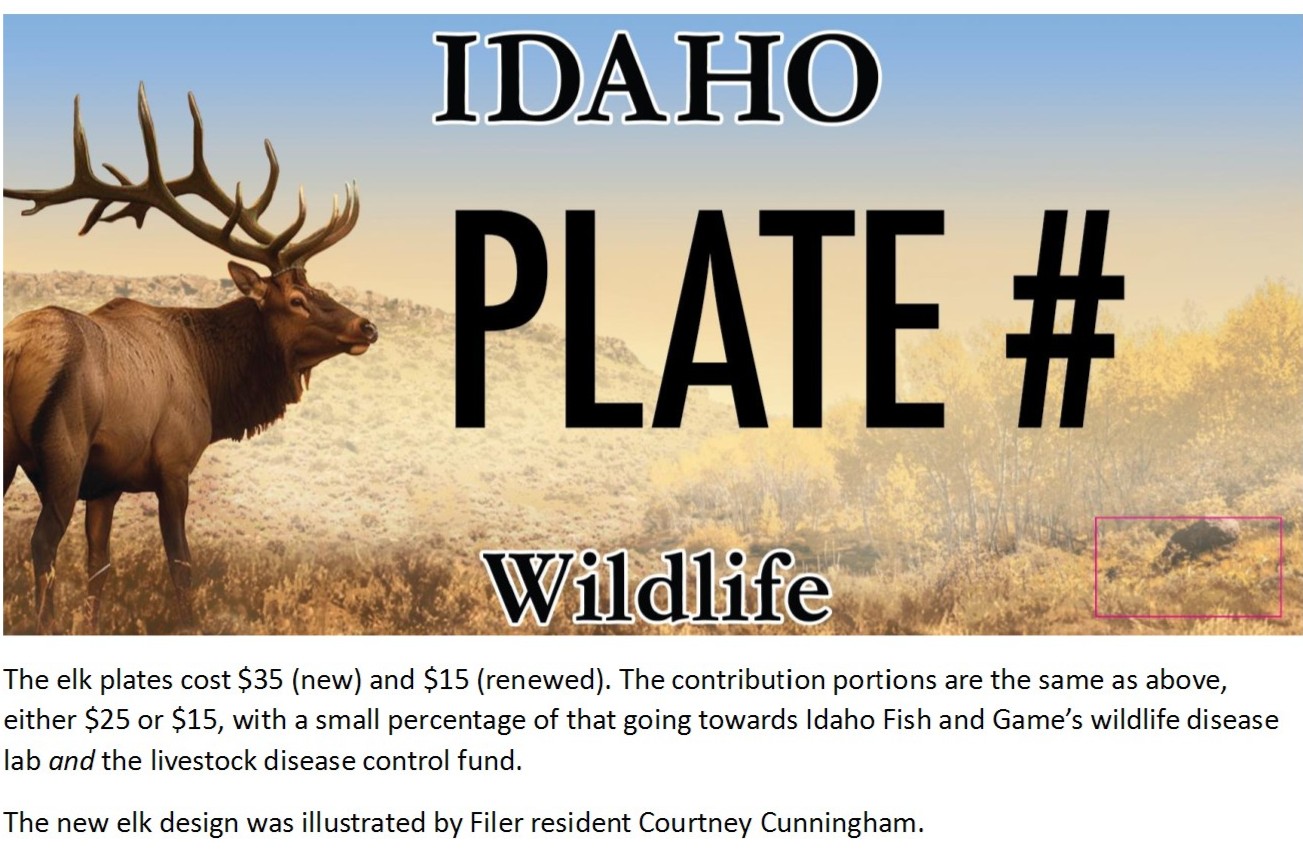
Great news! as of 2024, there are three NEW designs for license plates. They still are bluebird, cutthroat trout and elk, but they are beautiful.
Idaho Wildlife license plates provide essential funding that benefits the great diversity of native plants and wildlife that are not hunted, fished or trapped—over 10,000 species or 98% of Idaho’s species diversity. Game species that share the same habitats (such as elk, deer, antelope, sage-grouse, salmon, trout) also benefit from these specialty plates.
No state tax dollars are provided for wildlife diversity, conservation education and recreation programs. Neither are any revenues from the sale of hunting or fishing licenses spent on nongame species. Instead, these species depend on direct donations, federal grants, fundraising initiatives—and the Idaho Wildlife license plates.
Both my vehicles have Bluebird Plates. I prefer the bluebird because the nongame program gets 70 percent of the money from bluebird plates, but only 60 percent of the money from elk and trout plates - 10 percent of the money from elk plates supports wildlife disease monitoring and testing programs (to benefit the livestock industry) and 10 percent from cutthroat plates supports non-motorized boat access.
Incidentally, in 2014, the Idaho Legislature denied the Department of Fish and Game the ability to add new plates or even to change the name of the elk and cutthroat plates (very specific) to wildlife and fish plates, a move that would have allowed for changing images occasionally and generating more revenue. It would seem that they believe that we Idahoans don't want a well funded wildlife program.
I think it is time we let the Legislature know that Idahoan support wildlife funding and that we would like to see these generic plates come to fruition.
"WOW. What a phenomenal piece you wrote. You are amazing." Jennifer Jackson
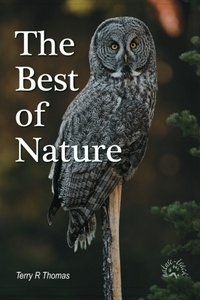
That is embarrassing, but actually a fairly typical response to my nature essays. Since The Best of Nature is created from the very best of 16 years of these nature essays published weekly in the Idaho Falls Post Register (online readership 70,000), it is a fine read. It covers a wide variety of topics including humorous glimpses of nature, philosophy, natural history, and conservation. Readers praise the style, breadth of subject matter and my ability to communicate complex and emotional topics in a relaxed and understandable manner.
Everyone can find something to love in this book. From teenagers to octogenarians, from the coffee shop to the school room, these nature essays are widely read and enjoyed.
Some of the essays here are my personal favorites, others seemed to strike a chord with readers. Most have an important message or lesson that will resonate with you. They are written with a goal to simultaneously entertain and educate about the wonderful workings of nature. Some will make you laugh out loud and others will bring a tear to the eye and warm your heart.
Readers Write:
"You hit a home run with your article on, Big Questions in Nature. It should be required reading for everyone who has lost touch with nature...great job!" Joe Chapman
"We enjoyed your column, Bloom Where Planted. Some of the best writing yet. The Post Register is fortunate to have your weekly columns." Lou Griffin.
To read more and to order a copy, click here or get the Kindle version
Copies are also available at:
Post Register
Island Park Builders Supply (upstairs)
Barnes and Noble in Idaho Falls
Harriman State Park, Island Park
Museum of Idaho
Valley Books, Jackson Wyoming
Avocet Corner Bookstore, Bear River National Wildlife Refuge, Brigham City, Utah
Craters of the Moon National Monument Bookstore, Arco, Idaho