The Living Planet
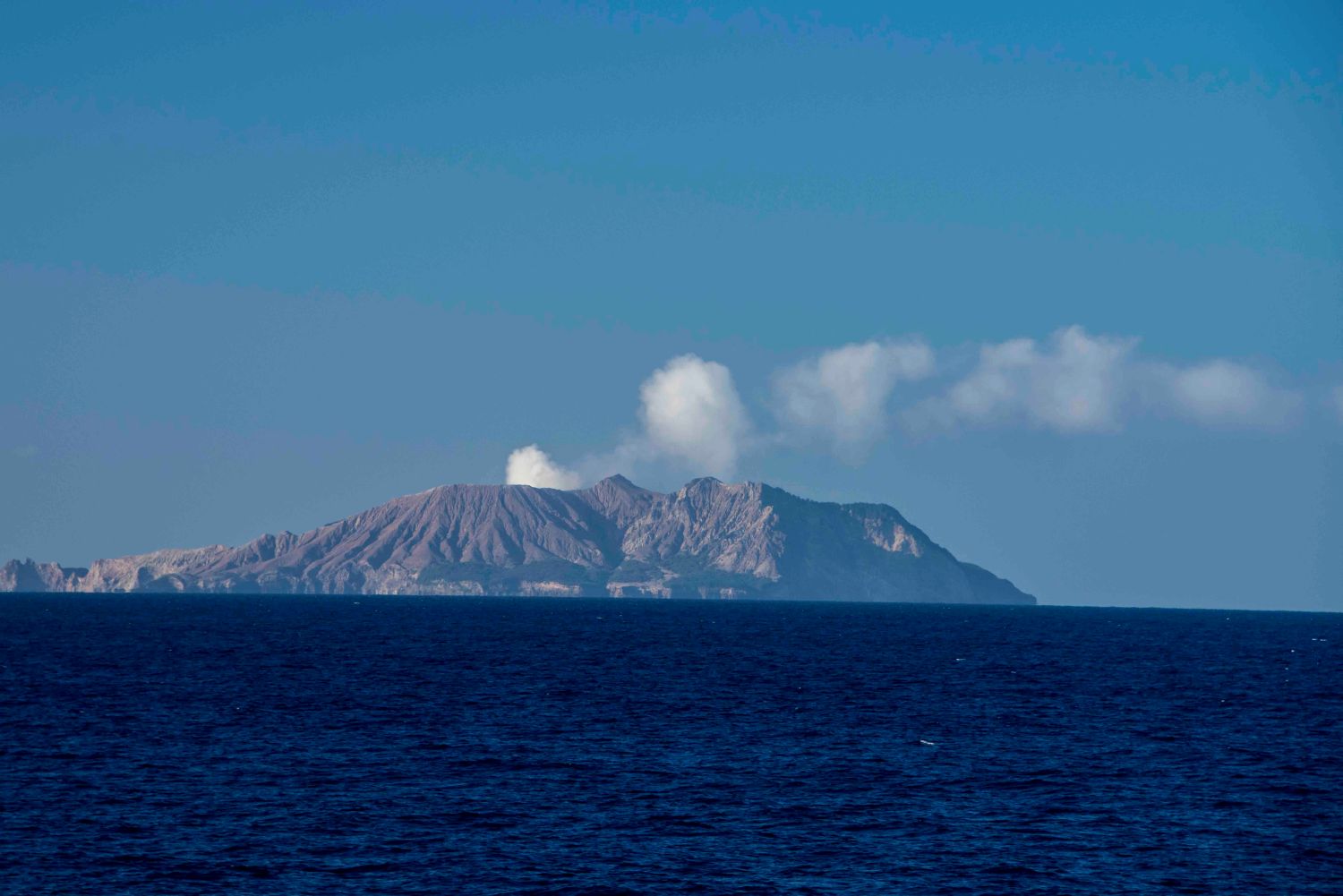
White or Whakaari Island, off the north coast of New Zealand and part of the famed, Ring of Fire, has had near-continuous activity since 1975, with eruptions in 2012, 2016, and 2019. That is smoke and steam coming from the crater.
The San Andreas Fault runs from just north of the California-Mexico border north and west to the California coast north of San Francisco, a distance of around 560 miles. This is a strike-slip fault, where the Pacific tectonic plate is slipping laterally, not up or down, along the edge of the North American tectonic plate. This fault is easily seen from space and if current research is to be believed, is under more stress than it has been in over 1,000 years. If the stress is relieved in the form of an earthquake, scientists believe that it could trigger another fault movement in the San Jacinto fault which runs through San Diego, possibly setting up a mega-earthquake.
From blue whales to microbes, Antarctica to deserts, rainforests to the depths of the ocean, life is everywhere on this planet, and when I contemplate a living planet, it is this wonderful, complex, and dynamic world of living things that I usually think of.
But as the San Andreas Fault demonstrates, our planet itself is much like a living organism and deserves to be included in any discussion about life on Earth. It moves, breathes, grows, stretches, and ages just like most biologically living things.
Take for instance, the Ring of Fire, a 25,000-mile-long chain of volcanoes that encircles the Pacific Ocean. It contains 915 active or dormant volcanoes ( two-thirds of all the volcanoes on Earth) including such giants as Tambora, Krakatoa in Indonesia, Pinatubo in the Philippines, Garibaldi in Canada, Mt. St. Helens in the USA, Nevado del Ruiz, Colombia (its 1985 eruption killed 25,000 people), and Ojos del Salado on the Chile/Argentina border and the world's tallest active volcano at 22,614 feet. Over 350 of these volcanoes have been active in recorded historical times.
These volcanoes are mostly formed by tectonic plate movement. For instance, those in the Andean mountains were formed from the subduction of the Antarctic and Nazca tectonic plates underneath the South American plate. This subduction leads to earthquakes, and 90 percent of the planet’s quakes occur within the Ring of Fire. Definitely it is an active, “living” system.
As the Eurasian and Indian plates continue their smashing collision, there is a measurable change at the top of the world. Mt. Everest actually grows by about four millimeters a year. Over 1,000 years, that could add up to about 13 feet of growth. Yes, that is slow, but measured against a geologic timescale, it is about 10 feet every eye-blink.
The planet’s oceans seem stable enough, but that is an illusion. Oceans move with large scale flows in a specific direction, usually a circular pattern. This happens both at the surface and in deeper layers as well. Our present super El Niño is a product of the flow of the South Equatorial current from South America toward Indonesia. This wildly complex water circulation system that regulates heat transfer, distributes nutrients, and influences weather and climate patterns globally, acts like a heart for our planet.
Glaciers have shaped and are still shaping much of our world. The ten countries with the most glaciers are: Pakistan, Canada, Russia, Greenland, United States, China, Chile, Norway, India, and Switzerland. Antarctica is not a country, but has over 80 percent of the world’s glaciers. However, it might be surprising to note that Africa has glaciers in three different areas. In fact, the only continent without glaciers is Australia.
As glaciers move, they grind, push, and pile up rock. And when they recede, they leave behind fresh soil, ready to be colonized by plants and animals. Granted, this takes time, but it is a process of renewal or “birth” on a grand scale.
The Earth may not have a body of flesh and blood, but in many ways, it is very much alive and constantly changing. It is truly a living planet.
Help Idaho Wildlife
When we traveled across the state in October 2017, we visited most of the Idaho Department of Fish and Game wildlife management areas. Most of the vehicles we saw using the wildlife management areas did not have wildlife plates. Buying wildlife plates is a great way for non-hunters and hunters alike to support wildlife-based recreation like birding.
C'mon folks, let's help Idaho's wildlife by proudly buying and displaying a wildlife license plate on each of our vehicles!
See below for information on Idaho plates. Most states have wildlife plates so if you live outside Idaho, check with your state's wildlife department or vehicle licensing division for availability of state wildlife plates where you live.
And tell them that you heard about it from Nature-track.com!
Wildlife License Plates
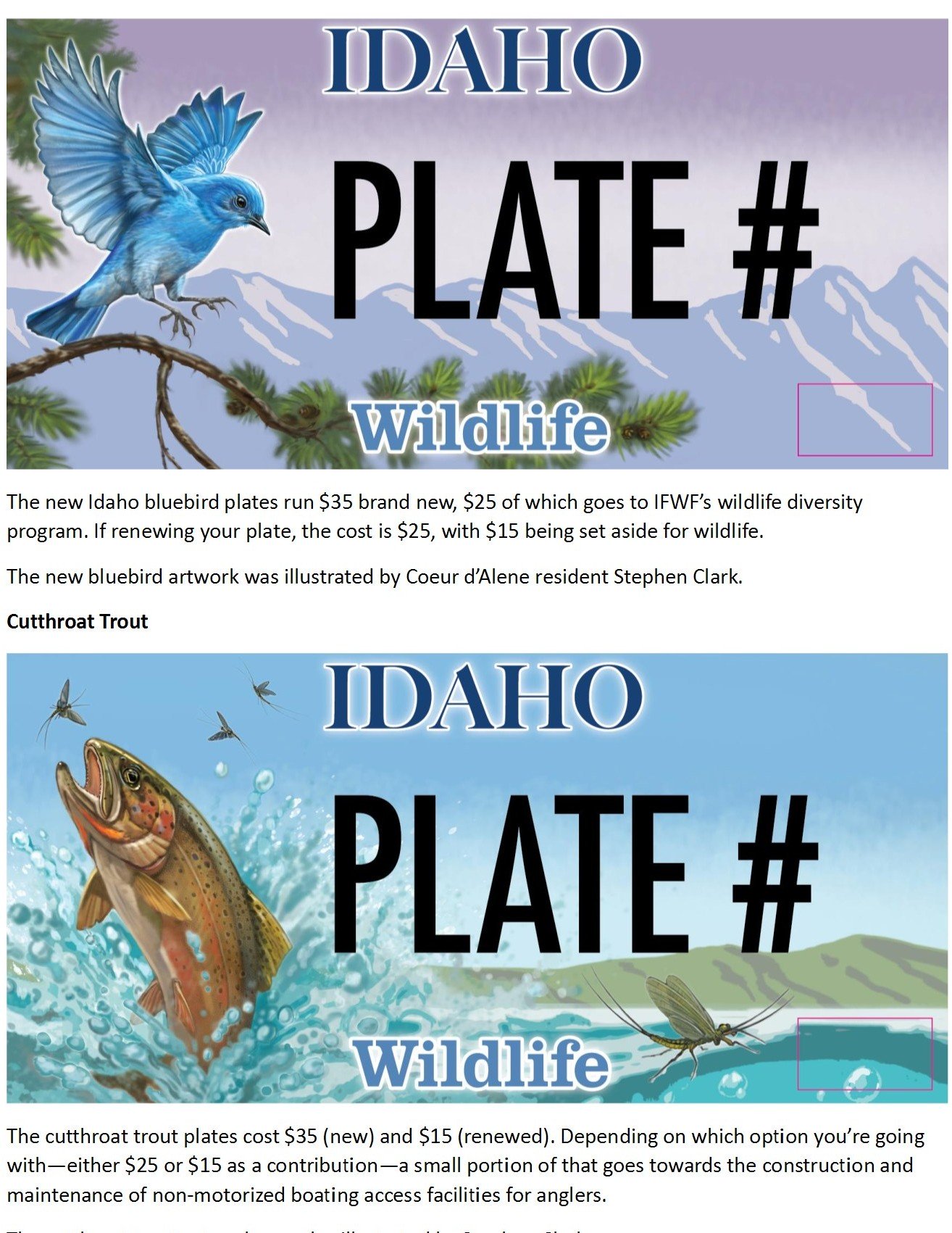
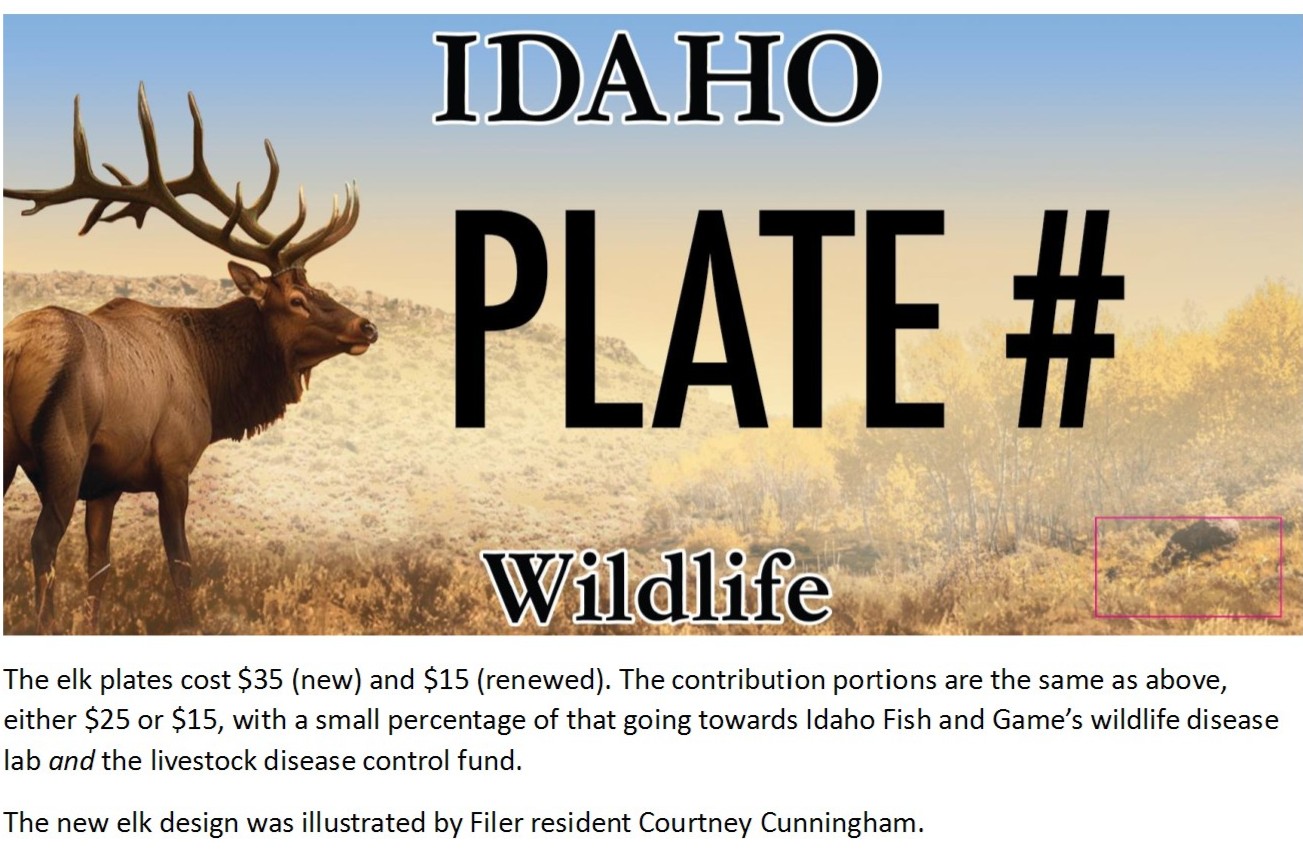
Great news! as of 2024, there are three NEW designs for license plates. They still are bluebird, cutthroat trout and elk, but they are beautiful.
Idaho Wildlife license plates provide essential funding that benefits the great diversity of native plants and wildlife that are not hunted, fished or trapped—over 10,000 species or 98% of Idaho’s species diversity. Game species that share the same habitats (such as elk, deer, antelope, sage-grouse, salmon, trout) also benefit from these specialty plates.
No state tax dollars are provided for wildlife diversity, conservation education and recreation programs. Neither are any revenues from the sale of hunting or fishing licenses spent on nongame species. Instead, these species depend on direct donations, federal grants, fundraising initiatives—and the Idaho Wildlife license plates.
Both my vehicles have Bluebird Plates. I prefer the bluebird because the nongame program gets 70 percent of the money from bluebird plates, but only 60 percent of the money from elk and trout plates - 10 percent of the money from elk plates supports wildlife disease monitoring and testing programs (to benefit the livestock industry) and 10 percent from cutthroat plates supports non-motorized boat access.
Incidentally, in 2014, the Idaho Legislature denied the Department of Fish and Game the ability to add new plates or even to change the name of the elk and cutthroat plates (very specific) to wildlife and fish plates, a move that would have allowed for changing images occasionally and generating more revenue. It would seem that they believe that we Idahoans don't want a well funded wildlife program.
I think it is time we let the Legislature know that Idahoan support wildlife funding and that we would like to see these generic plates come to fruition.
"WOW. What a phenomenal piece you wrote. You are amazing." Jennifer Jackson
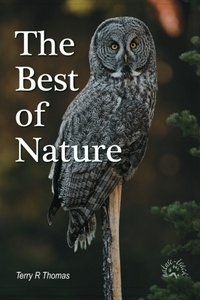
That is embarrassing, but actually a fairly typical response to my nature essays. Since The Best of Nature is created from the very best of 16 years of these nature essays published weekly in the Idaho Falls Post Register (online readership 70,000), it is a fine read. It covers a wide variety of topics including humorous glimpses of nature, philosophy, natural history, and conservation. Readers praise the style, breadth of subject matter and my ability to communicate complex and emotional topics in a relaxed and understandable manner.
Everyone can find something to love in this book. From teenagers to octogenarians, from the coffee shop to the school room, these nature essays are widely read and enjoyed.
Some of the essays here are my personal favorites, others seemed to strike a chord with readers. Most have an important message or lesson that will resonate with you. They are written with a goal to simultaneously entertain and educate about the wonderful workings of nature. Some will make you laugh out loud and others will bring a tear to the eye and warm your heart.
Readers Write:
"You hit a home run with your article on, Big Questions in Nature. It should be required reading for everyone who has lost touch with nature...great job!" Joe Chapman
"We enjoyed your column, Bloom Where Planted. Some of the best writing yet. The Post Register is fortunate to have your weekly columns." Lou Griffin.
To read more and to order a copy, click here or get the Kindle version
Copies are also available at:
Post Register
Island Park Builders Supply (upstairs)
Barnes and Noble in Idaho Falls
Harriman State Park, Island Park
Museum of Idaho
Valley Books, Jackson Wyoming
Avocet Corner Bookstore, Bear River National Wildlife Refuge, Brigham City, Utah
Craters of the Moon National Monument Bookstore, Arco, Idaho