Winter Preparedness
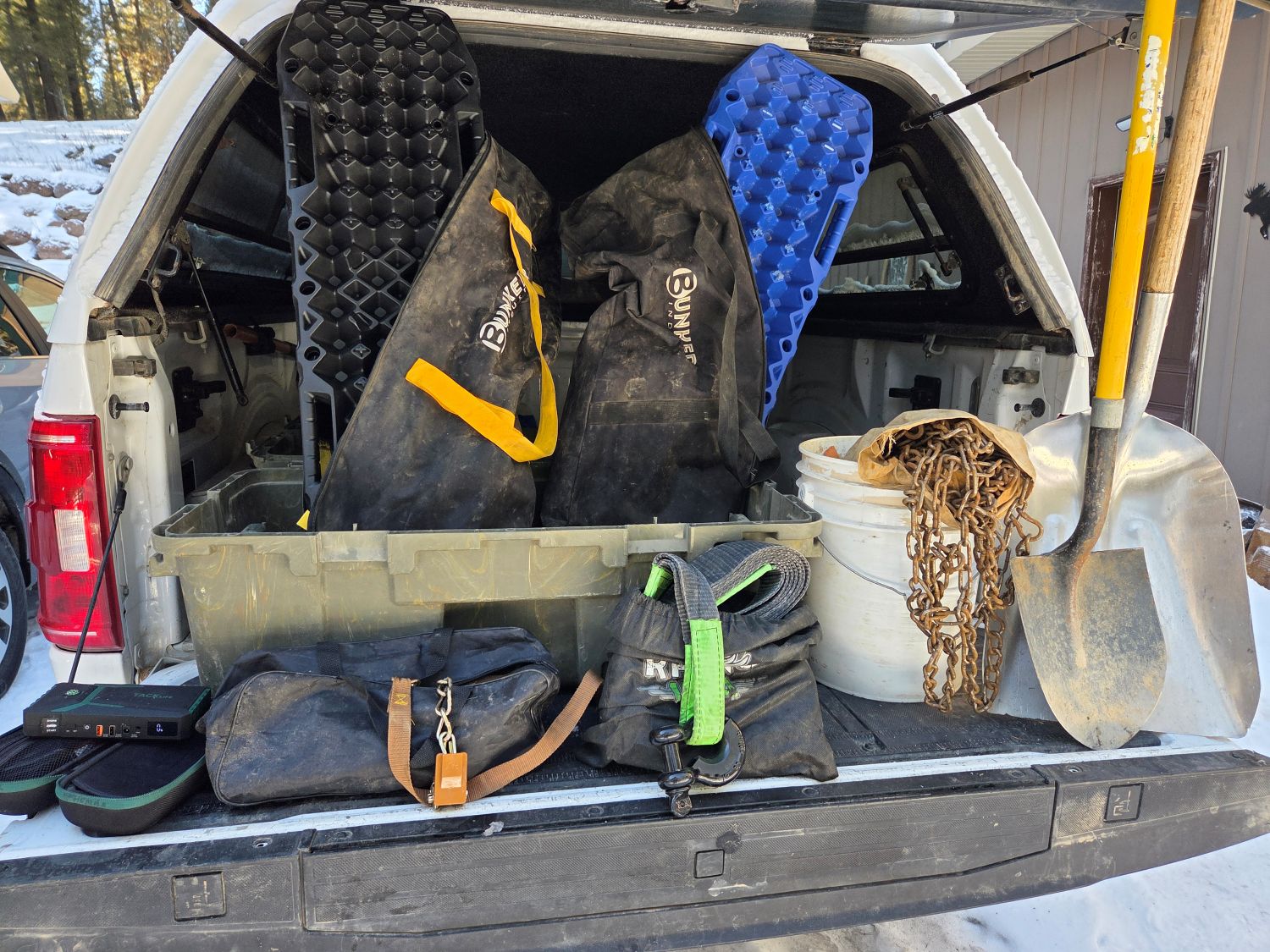
©Terry R. Thomas/www.nature-track.com
Some of the gear I carry in my truck for winter driving.
It was two days before Christmas 2021 when a young man from Highland, Utah, decided to go for a hike near Tooele, Utah. Taking an unfamiliar road, he soon became mired in a snowdrift. With limited tools, he quickly determined that he was not going to free the vehicle. Since he had neglected to tell anyone his plans, he realized that his vehicle might not be found for days. Being well prepared for hiking, he decided to walk out. In the meantime, when he did not return home, a massive search effort was launched. Fortunately, the story had a happy ending when the hiker, after 17 hours and 33 miles, was picked up by deputies who were searching for him.
The news article accompanying this story showed a photo of his stuck vehicle. I do not want to be a Monday morning quarterback on this, but it certainly appeared to me that a little preparedness would have helped him to avoid a very long walk.
According to the National Weather Service, 70 percent of winter deaths related to cold occur in vehicles. Those who are prepared can extract themselves or survive even multiple nights stranded, but the unprepared are in peril after just a few hours.
Being prepared for winter adventures is quite a bit different than summer activities. Snow and cold are givens and the smart motorist will carry the proper emergency gear to get unstuck or to weather the storm.
Winter vehicle preparedness takes two forms—vehicle and personal. I will start with vehicles first.
I usually get stuck in the snow several times a year in my 4x4 truck. These episodes can be as simple as not being able to drive up my steep driveway in fresh snow to sliding off the road or backing into a ditch (all three happened last year). The difference is that I can usually get out if I have three things: a large grain scoop shovel, tire chains, and traction boards. Traction boards, about 30 inches long and made of hard plastic, go in front of or behind your tires and you drive up on them. These are a relatively new addition for me, but after trying one set of two, I ordered another set to have one for each wheel. The scoop shovel can move a lot of snow and is much better than a plastic snow shovel. As for chains, I carry a full set with tighteners, but I also carry a set of inexpensive emergency chains. These strap on one link at a time and are much faster to install than the full chains. If I just need to get out of a hole, I try these first. I also carry a tarp to lay/kneel on when working in the snow and mud to keep me dry.
I scoured the internet to see what other people carry and they run from cheap survival kits to entire backseats full of gear. Of all that, there seemed to be some consistency in a few items. Besides the three items listed above, the following seemed like essentials: A battery jumper box that can start your car if your battery fails (and can charge phones if you have a cord). I have used ours many times and have been surprised by how long the charge lasts before I must recharge it. Many people recommended jumper cables, but they require a second vehicle. In our car we do not have room for a grain scoop shovel. Instead, I depend upon a small aluminum shovel like what snowmobilers use. A folding military foxhole shovel is also useful for dirt and ice, although in my truck I prefer a full-sized regular shovel. A tow chain or strap is also mandatory. I much prefer the strap as I think it is safer and cleaner. Either way, you need to have a way to hook on to both vehicles. Instead of attaching to a trailer ball (dangerous), I remove the stinger and re-insert the pin through the strap loop. That works on my side. Finding a tie off on another vehicle can be a challenge though so I also carry a couple of shackles. Mine are metal, but soft shackles work well too. My final items would be a well-stocked toolkit and a bag of ice melt, kitty litter, or sand for traction on ice.
It was interesting to see what different YouTubers thought was essential gear and the point is, you can add anything you think important. Additional gear might include a high-lift jack, hydraulic jack, come-along, electric signal flares, a saw, tire inflator, and tire repair kit.
Next time I will discuss the human side of this equation.
Help Idaho Wildlife
When we traveled across the state in October 2017, we visited most of the Idaho Department of Fish and Game wildlife management areas. Most of the vehicles we saw using the wildlife management areas did not have wildlife plates. Buying wildlife plates is a great way for non-hunters and hunters alike to support wildlife-based recreation like birding.
C'mon folks, let's help Idaho's wildlife by proudly buying and displaying a wildlife license plate on each of our vehicles!
See below for information on Idaho plates. Most states have wildlife plates so if you live outside Idaho, check with your state's wildlife department or vehicle licensing division for availability of state wildlife plates where you live.
And tell them that you heard about it from Nature-track.com!
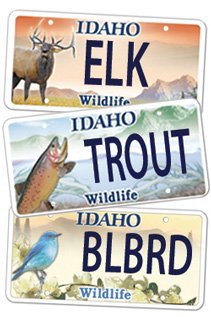
Wildlife License Plates
Great news! as of 2024, there are three NEW designs for license plates. They still are bluebird, cutthroat trout and elk, but they are beautiful.
Idaho Wildlife license plates provide essential funding that benefits the great diversity of native plants and wildlife that are not hunted, fished or trapped—over 10,000 species or 98% of Idaho’s species diversity. Game species that share the same habitats (such as elk, deer, antelope, sage-grouse, salmon, trout) also benefit from these specialty plates.
No state tax dollars are provided for wildlife diversity, conservation education and recreation programs. Neither are any revenues from the sale of hunting or fishing licenses spent on nongame species. Instead, these species depend on direct donations, federal grants, fundraising initiatives—and the Idaho Wildlife license plates.
Both my vehicles have Bluebird Plates. I prefer the bluebird because the nongame program gets 70 percent of the money from bluebird plates, but only 60 percent of the money from elk and trout plates - 10 percent of the money from elk plates supports wildlife disease monitoring and testing programs (to benefit the livestock industry) and 10 percent from cutthroat plates supports non-motorized boat access.
Incidentally, in 2014, the Idaho Legislature denied the Department of Fish and Game the ability to add new plates or even to change the name of the elk and cutthroat plates (very specific) to wildlife and fish plates, a move that would have allowed for changing images occasionally and generating more revenue. It would seem that they believe that we Idahoans don't want a well funded wildlife program.
I think it is time we let the Legislature know that Idahoan support wildlife funding and that we would like to see these generic plates come to fruition.
"WOW. What a phenomenal piece you wrote. You are amazing." Jennifer Jackson
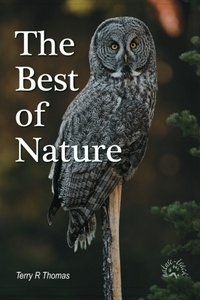
That is embarrassing, but actually a fairly typical response to my nature essays. Since The Best of Nature is created from the very best of 16 years of these nature essays published weekly in the Idaho Falls Post Register (online readership 70,000), it is a fine read. It covers a wide variety of topics including humorous glimpses of nature, philosophy, natural history, and conservation. Readers praise the style, breadth of subject matter and my ability to communicate complex and emotional topics in a relaxed and understandable manner.
Everyone can find something to love in this book. From teenagers to octogenarians, from the coffee shop to the school room, these nature essays are widely read and enjoyed.
Some of the essays here are my personal favorites, others seemed to strike a chord with readers. Most have an important message or lesson that will resonate with you. They are written with a goal to simultaneously entertain and educate about the wonderful workings of nature. Some will make you laugh out loud and others will bring a tear to the eye and warm your heart.
Readers Write:
"You hit a home run with your article on, Big Questions in Nature. It should be required reading for everyone who has lost touch with nature...great job!" Joe Chapman
"We enjoyed your column, Bloom Where Planted. Some of the best writing yet. The Post Register is fortunate to have your weekly columns." Lou Griffin.
To read more and to order a copy, click here or get the Kindle version
Copies are also available at:
Post Register
Island Park Builders Supply (upstairs)
Barnes and Noble in Idaho Falls
Harriman State Park, Island Park
Museum of Idaho
Valley Books, Jackson Wyoming
Avocet Corner Bookstore, Bear River National Wildlife Refuge, Brigham City, Utah
Craters of the Moon National Monument Bookstore, Arco, Idaho