Families
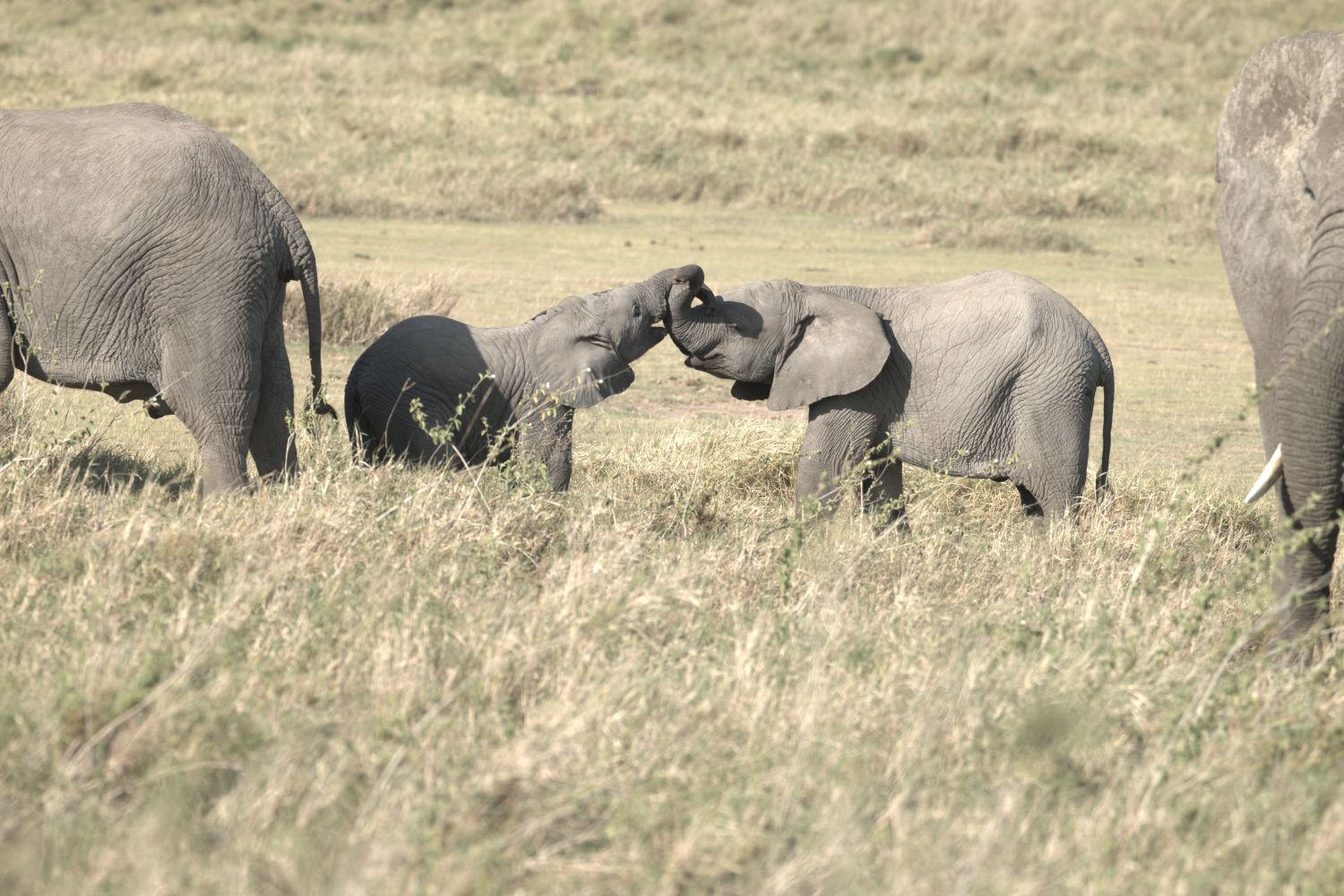
©Terry R. Thomas/www.nature-track.com
Elephants have possibly the most highly developed social bonds in the animal (excluding humans) kingdom.
Sixteen elephants of all sizes strolled beside our safari vehicle in Serengeti National Park, Tanzania. Youngsters, less than a year old but still the size of cattle, played with each other while older brothers and sisters, aunts, and moms all fed on the grasses while they steadily moved toward some destination known only to them. They touched and communicated just as any family might.
Family. Humans prize familial connections over any other but in the animal world we are not alone. Family life is a common one, practiced by many species, and has proven that developing strong social bonds gives them a clear survival advantage.
A clarification is in order. I am talking about real family groups where there is non-random repeated social interaction among members of an extended family that includes recognition of individuals. A flock, school, or herd is not necessarily the same as a family unit. These may be animals living as individuals but that join together for safety in numbers without social commitments to one another.
Among animals, elephants are often seen as the poster kids for socially complex animals. Their family groups consist of adult females, juvenile males and females, and calves. The males eventually leave but the females stay in bonded family groups for life. They have distinct “jobs” within the family, and all adult females aid in calf rearing. They have socially complex behaviors. For instance, they seem to mourn when one of their clan dies and they show what can only be termed affection for members of their group. They have an extensive vocal repertoire and an intricate communication network. Moreso, not only can they recognize individuals from encounters years previous, but new research indicates that elephants even have “names” for each other using personalized calls to address members of their group.
Orcas (killer whales) are another group with strong family ties and they take it one step further. With most animal family groups, males leave the family upon maturity. Not so with orcas. Males remain with their mothers forming multi-generational pods that develop hunting strategies, communicate, and travel together. Grandmothers in the pod are crucial for teaching survival skills and guiding the pod to the best hunting.
Wolves are often revered for their strong family ties, but our understanding of those relationships has undergone a major sea change. According to an article in Scientific American, “in recent years wildlife biologists have largely dropped the term “alpha.” In the wild, researchers have found that most wolf packs are simply families, led by a breeding pair, and bloody duels for supremacy are rare. Infighting for dominance is basically unheard of in a typical pack. When offspring are two to three years old, they leave the pack in search of mates, aiming to start their own pack. The alpha wolf notion of challenging dad for dominance of the existing pack just isn’t in the wolf playbook.” I interpret this to mean, “Dad is smart. Listen to him”. I like it.
Prairie dogs are another great example of close family or social complex situations. They live in large colonies, but not all are closely related. Yet, each colony consists of many sub-groups, families, that are strongly tied to each other. Dr. Jennifer Verdolin has studied prairie dogs for two decades and concludes that, "People look at them like they're just this big rat, but they have unique language; they have dialects. They collaborate and have cultural differences between colonies. They greet each other with a kiss, and individuals that kiss each other and don't fight afterwards belong to the same social group and territory. All you need to do is watch. The more times they've kissed, the stronger the connection. "This actually goes counter to most prairie dog literature, that says there's a single male and a harem of females. Most social groups are made up of multiple males and multiple females. Everybody is kissing everybody, and the babies are the result of all that activity."
This list is far from complete and could include beavers, chimpanzees, bonobos, gorillas, and far more. Clearly, humans do not have a corner on the market of familial love and loyalty.
Help Idaho Wildlife
When we traveled across the state in October 2017, we visited most of the Idaho Department of Fish and Game wildlife management areas. Most of the vehicles we saw using the wildlife management areas did not have wildlife plates. Buying wildlife plates is a great way for non-hunters and hunters alike to support wildlife-based recreation like birding.
C'mon folks, let's help Idaho's wildlife by proudly buying and displaying a wildlife license plate on each of our vehicles!
See below for information on Idaho plates. Most states have wildlife plates so if you live outside Idaho, check with your state's wildlife department or vehicle licensing division for availability of state wildlife plates where you live.
And tell them that you heard about it from Nature-track.com!
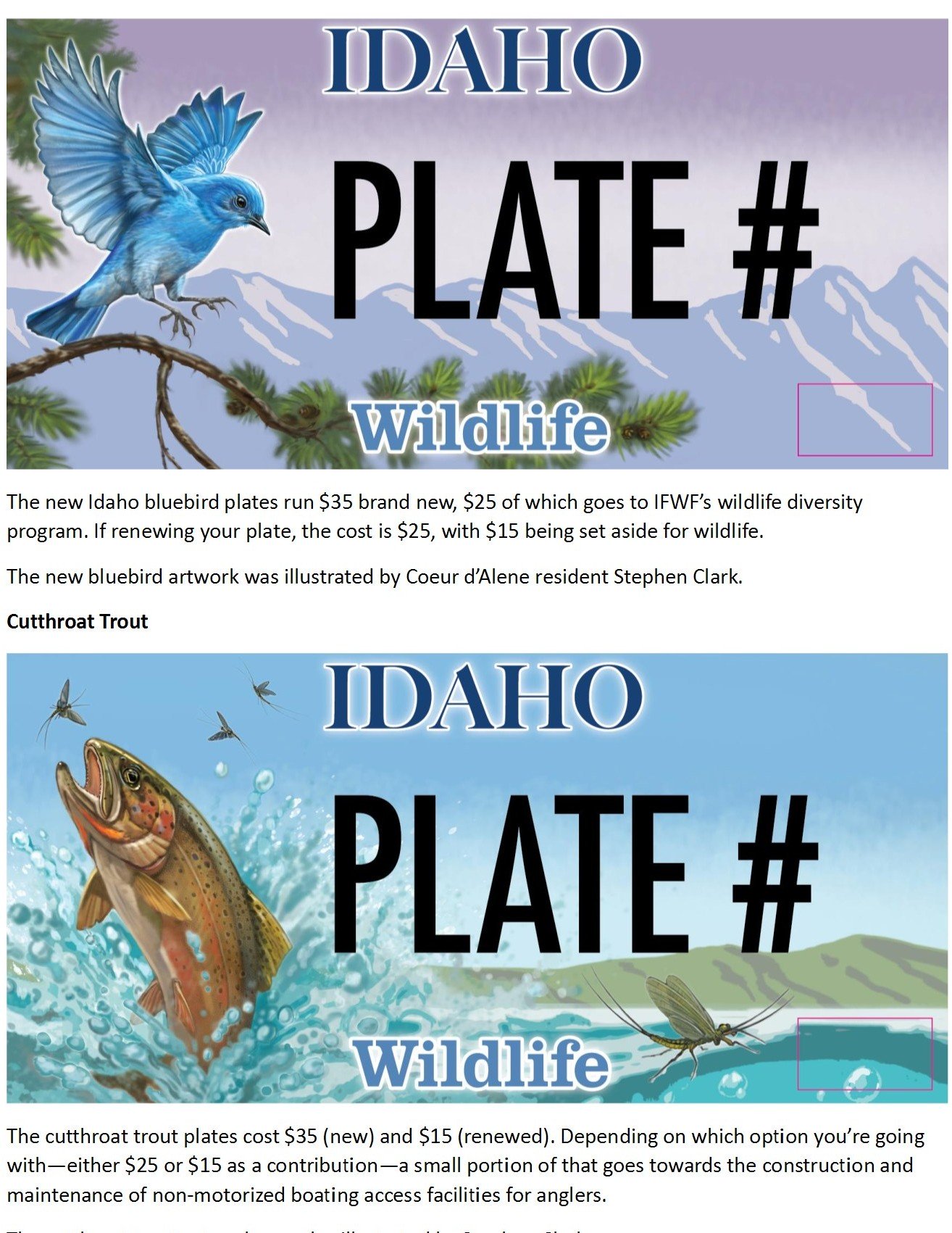
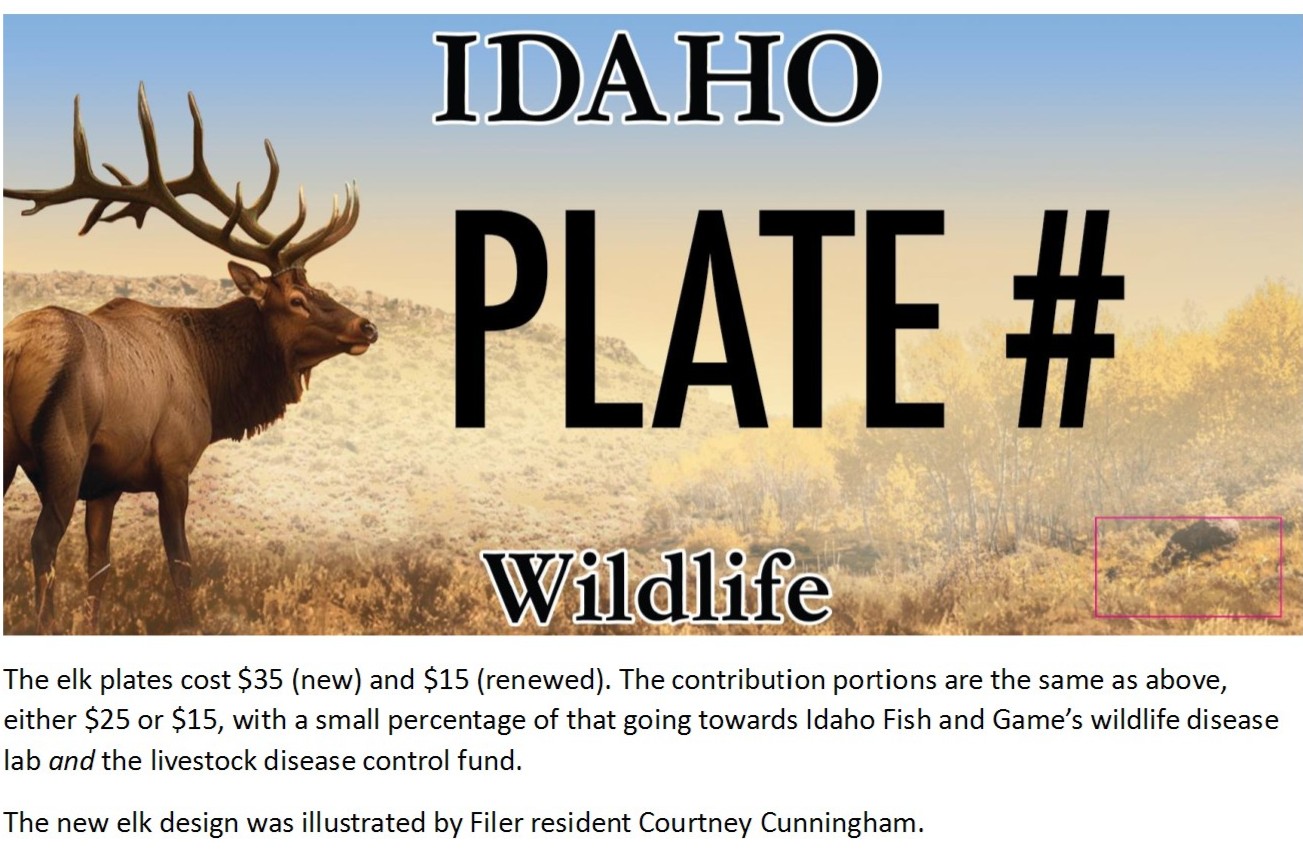
Wildlife License Plates
Great news! as of 2024, there are three NEW designs for license plates. They still are bluebird, cutthroat trout and elk, but they are beautiful.
Idaho Wildlife license plates provide essential funding that benefits the great diversity of native plants and wildlife that are not hunted, fished or trapped—over 10,000 species or 98% of Idaho’s species diversity. Game species that share the same habitats (such as elk, deer, antelope, sage-grouse, salmon, trout) also benefit from these specialty plates.
No state tax dollars are provided for wildlife diversity, conservation education and recreation programs. Neither are any revenues from the sale of hunting or fishing licenses spent on nongame species. Instead, these species depend on direct donations, federal grants, fundraising initiatives—and the Idaho Wildlife license plates.
Both my vehicles have Bluebird Plates. I prefer the bluebird because the nongame program gets 70 percent of the money from bluebird plates, but only 60 percent of the money from elk and trout plates - 10 percent of the money from elk plates supports wildlife disease monitoring and testing programs (to benefit the livestock industry) and 10 percent from cutthroat plates supports non-motorized boat access.
Incidentally, in 2014, the Idaho Legislature denied the Department of Fish and Game the ability to add new plates or even to change the name of the elk and cutthroat plates (very specific) to wildlife and fish plates, a move that would have allowed for changing images occasionally and generating more revenue. It would seem that they believe that we Idahoans don't want a well funded wildlife program.
I think it is time we let the Legislature know that Idahoan support wildlife funding and that we would like to see these generic plates come to fruition.
"WOW. What a phenomenal piece you wrote. You are amazing." Jennifer Jackson
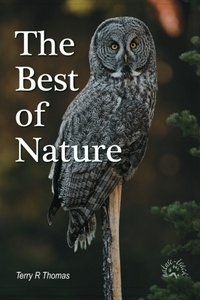
That is embarrassing, but actually a fairly typical response to my nature essays. Since The Best of Nature is created from the very best of 16 years of these nature essays published weekly in the Idaho Falls Post Register (online readership 70,000), it is a fine read. It covers a wide variety of topics including humorous glimpses of nature, philosophy, natural history, and conservation. Readers praise the style, breadth of subject matter and my ability to communicate complex and emotional topics in a relaxed and understandable manner.
Everyone can find something to love in this book. From teenagers to octogenarians, from the coffee shop to the school room, these nature essays are widely read and enjoyed.
Some of the essays here are my personal favorites, others seemed to strike a chord with readers. Most have an important message or lesson that will resonate with you. They are written with a goal to simultaneously entertain and educate about the wonderful workings of nature. Some will make you laugh out loud and others will bring a tear to the eye and warm your heart.
Readers Write:
"You hit a home run with your article on, Big Questions in Nature. It should be required reading for everyone who has lost touch with nature...great job!" Joe Chapman
"We enjoyed your column, Bloom Where Planted. Some of the best writing yet. The Post Register is fortunate to have your weekly columns." Lou Griffin.
To read more and to order a copy, click here or get the Kindle version
Copies are also available at:
Post Register
Island Park Builders Supply (upstairs)
Barnes and Noble in Idaho Falls
Harriman State Park, Island Park
Museum of Idaho
Valley Books, Jackson Wyoming
Avocet Corner Bookstore, Bear River National Wildlife Refuge, Brigham City, Utah
Craters of the Moon National Monument Bookstore, Arco, Idaho