Taxonomic Families
©Terry R. Thomas/www.nature-track.com
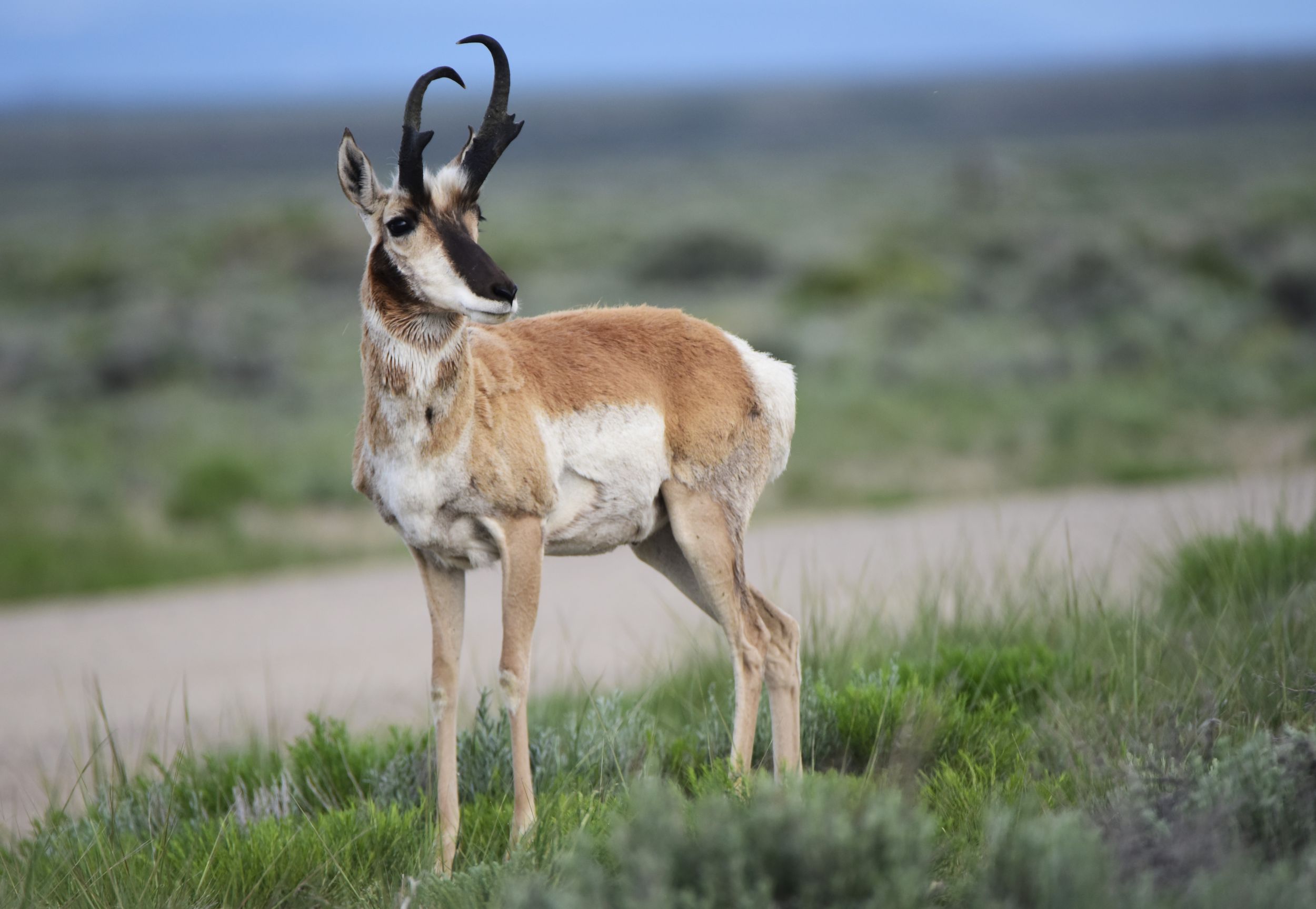
Pronghorn antelope don’t have a lot of relatives. They are the only living members of their genus and family.
When we use the word, family, we are usually referring to our close relations, those we hold most dear. There is another meaning to the word family though, other than siblings, parents, kids, and relatives. When referring to the classification of living things, family is a classification under the current system of taxonomic categorization of Domain, Kingdom, Phylum, Class, Order, Family, Genus, Species. Family names always end in either ‘idae‘ or ‘aceae’ such as Mustelidae or Asteraceae.
Taxonomy has been around since 1735 when Carl Linnaeaus proposed this system as a way to keep classification organized. It is commonly referred to as a binomial system because each species is given a unique name, referred to as its scientific name, which is a combination of its genus name and species name. So, for humans, we are in the genus Homo and species sapiens for a binomial name of, Homo sapiens, the only living species in this genus. However, we are members of the Family Hominidae along with genera Pan, Gorilla, and Pongo. That may be offensive to some people, but there is a reason for it. All these genera share the following (from Wikipedia): 1. Larger brain size supporting advanced cognitive functions such as problem-solving and tool use. 2. Complex social behaviors and intricate family bonds and hierarchies. 3. Unlike many other primates, members of the Hominidae family do not have tails, which is a significant distinguishing feature.
Family designation is, to me, the point where connections become apparent. Families share a common ancestor and similar physical, social, behavioral, and/or habitat traits. For instance, with birds, bill shape and size is a common way for grouping them. For instance, the flycatcher family, Tyrannidae, all have wide short bills, while warblers, Sylviidae (Old World) and Parulidae (New World), have thin pointed bills. Foot shape, plumage, diet, habitats, and habits are also part of a classification.
Family relationships are close enough that the average person can recognize the similarities. However, genetics is still the current core of relatedness and has created a lot of commotion within the taxonomies of many families. Genetics can reveal evolutionary relationships that are not visibly apparent. This leads to a lot of shuffling around as genetics rules over physical traits. Two species may look similar but genetic research may show that the similarities are not ancestral. Then one of the species is shuffled to a new classification. That is why it is really hard to get an accurate count on the number of species, genera, or families. New research is constantly refining familial relationships. The further up the classification system you go, the less likely it is that there will be a change, and the dividing line between Order and Family seems to be that point. Animals have been shuffled between families or even put in their own families, but changing orders is far less common.
There are still many different families on this planet though. For instance, there are 413-416 plant families. That is a lot, but insect families number in the thousands (I could not find an accurate count). The largest taxonomic family of animals is the weevil or snout beetle family, Curculionidae, which contains over 60,000 species. Take a step up the classification scale to Order and the beetle order Coleoptera is the largest in the world with 600,000 species and 200 families. There are 242-252 recognized bird families worldwide. The largest bird family is Tyrannidae with 450 species. As for mammals, as of July 2025 (it is important to include reference statements like this as the field is constantly changing), there are 161 families, 1,258 genera, and around 5,937 recognized living species. Reptiles? As of January 2025, there are 94 families.
Interestingly, there are a few families in which there is only a single species. Pronghorn antelope come to mind. The Family Antilocapridae contains the pronghorn as its only living representative. However, the family contains at least three other genera that went extinct at the end of the Pleistocene. Platypuses, aye-ayes, cuckoo-rollers, and aardvarks are all the only living relatives in their respective families.
As important as families are to us, the concept of family in the taxonomic sense is equally important in appreciating the complexity and the order of nature.
Help Idaho Wildlife
When we traveled across the state in October 2017, we visited most of the Idaho Department of Fish and Game wildlife management areas. Most of the vehicles we saw using the wildlife management areas did not have wildlife plates. Buying wildlife plates is a great way for non-hunters and hunters alike to support wildlife-based recreation like birding.
C'mon folks, let's help Idaho's wildlife by proudly buying and displaying a wildlife license plate on each of our vehicles!
See below for information on Idaho plates. Most states have wildlife plates so if you live outside Idaho, check with your state's wildlife department or vehicle licensing division for availability of state wildlife plates where you live.
And tell them that you heard about it from Nature-track.com!
Wildlife License Plates
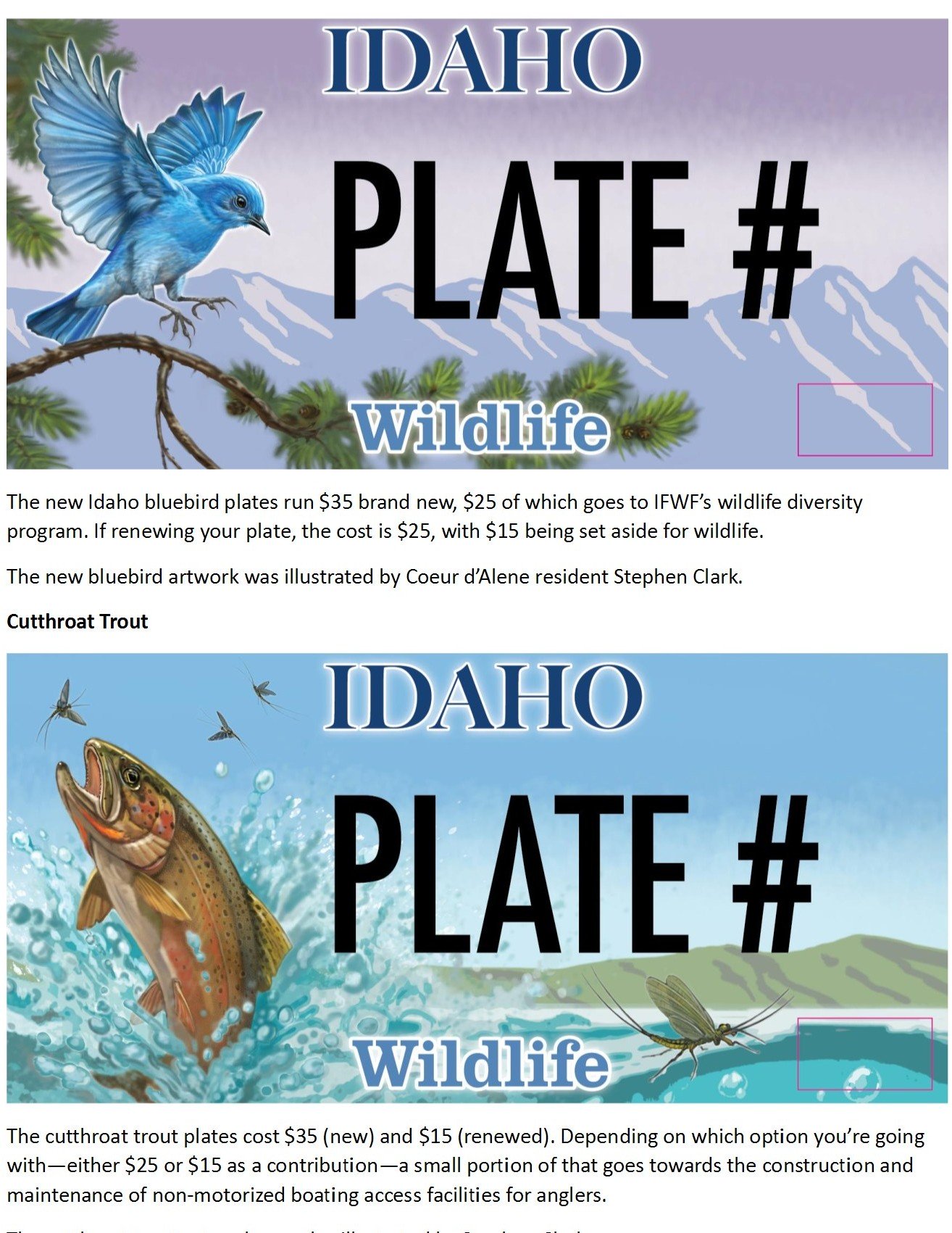
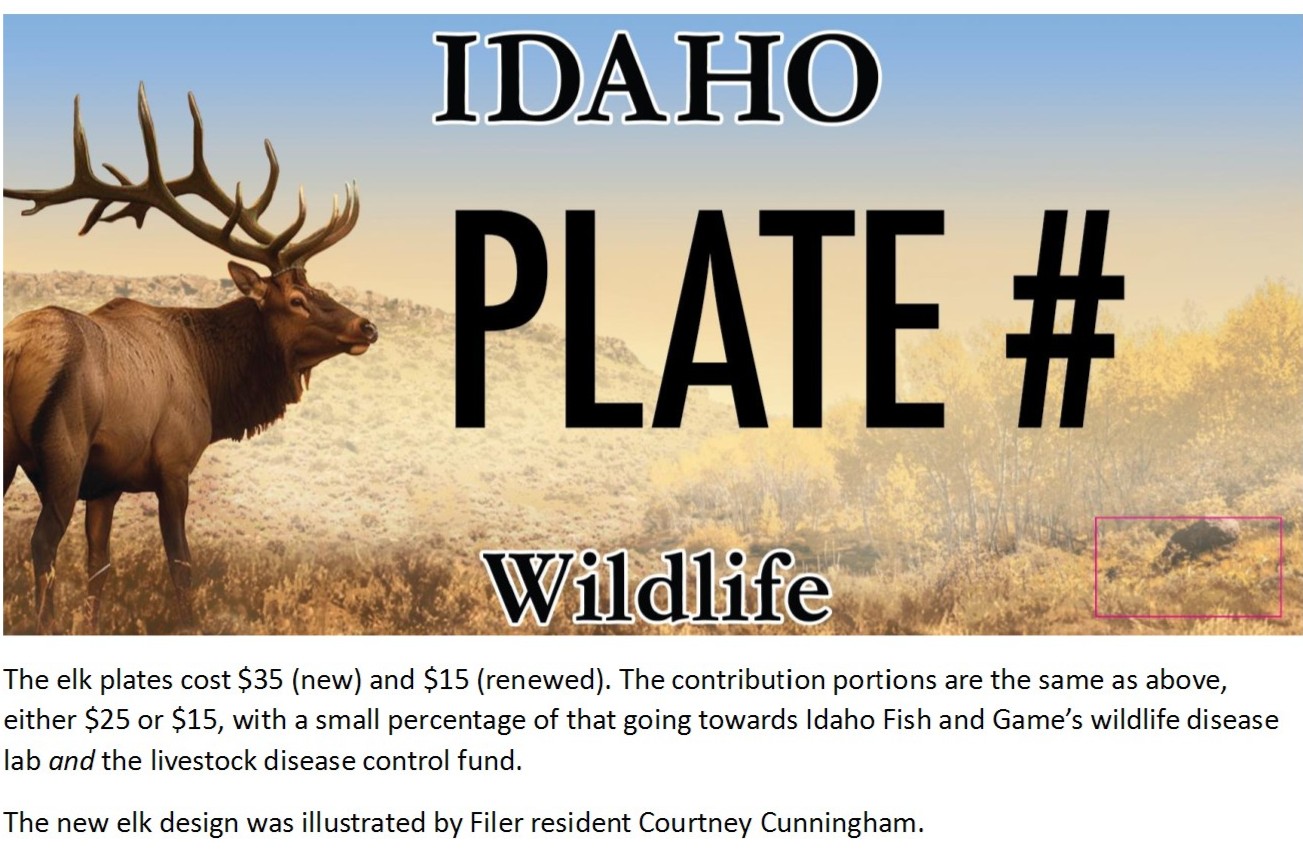
Great news! as of 2024, there are three NEW designs for license plates. They still are bluebird, cutthroat trout and elk, but they are beautiful.
Idaho Wildlife license plates provide essential funding that benefits the great diversity of native plants and wildlife that are not hunted, fished or trapped—over 10,000 species or 98% of Idaho’s species diversity. Game species that share the same habitats (such as elk, deer, antelope, sage-grouse, salmon, trout) also benefit from these specialty plates.
No state tax dollars are provided for wildlife diversity, conservation education and recreation programs. Neither are any revenues from the sale of hunting or fishing licenses spent on nongame species. Instead, these species depend on direct donations, federal grants, fundraising initiatives—and the Idaho Wildlife license plates.
Both my vehicles have Bluebird Plates. I prefer the bluebird because the nongame program gets 70 percent of the money from bluebird plates, but only 60 percent of the money from elk and trout plates - 10 percent of the money from elk plates supports wildlife disease monitoring and testing programs (to benefit the livestock industry) and 10 percent from cutthroat plates supports non-motorized boat access.
Incidentally, in 2014, the Idaho Legislature denied the Department of Fish and Game the ability to add new plates or even to change the name of the elk and cutthroat plates (very specific) to wildlife and fish plates, a move that would have allowed for changing images occasionally and generating more revenue. It would seem that they believe that we Idahoans don't want a well funded wildlife program.
I think it is time we let the Legislature know that Idahoan support wildlife funding and that we would like to see these generic plates come to fruition.
"WOW. What a phenomenal piece you wrote. You are amazing." Jennifer Jackson
That is embarrassing, but actually a fairly typical response to my nature essays. Since The Best of Nature is created from the very best of 16 years of these nature essays published weekly in the Idaho Falls Post Register (online readership 70,000), it is a fine read. It covers a wide variety of topics including humorous glimpses of nature, philosophy, natural history, and conservation. Readers praise the style, breadth of subject matter and my ability to communicate complex and emotional topics in a relaxed and understandable manner.
Everyone can find something to love in this book. From teenagers to octogenarians, from the coffee shop to the school room, these nature essays are widely read and enjoyed.
Some of the essays here are my personal favorites, others seemed to strike a chord with readers. Most have an important message or lesson that will resonate with you. They are written with a goal to simultaneously entertain and educate about the wonderful workings of nature. Some will make you laugh out loud and others will bring a tear to the eye and warm your heart.
Readers Write:
"You hit a home run with your article on, Big Questions in Nature. It should be required reading for everyone who has lost touch with nature...great job!" Joe Chapman
"We enjoyed your column, Bloom Where Planted. Some of the best writing yet. The Post Register is fortunate to have your weekly columns." Lou Griffin.
To read more and to order a copy, click here or get the Kindle version
Copies are also available at:
Post Register
Island Park Builders Supply (upstairs)
Barnes and Noble in Idaho Falls
Harriman State Park, Island Park
Museum of Idaho
Valley Books, Jackson Wyoming
Avocet Corner Bookstore, Bear River National Wildlife Refuge, Brigham City, Utah
Craters of the Moon National Monument Bookstore, Arco, Idaho