Bycatch
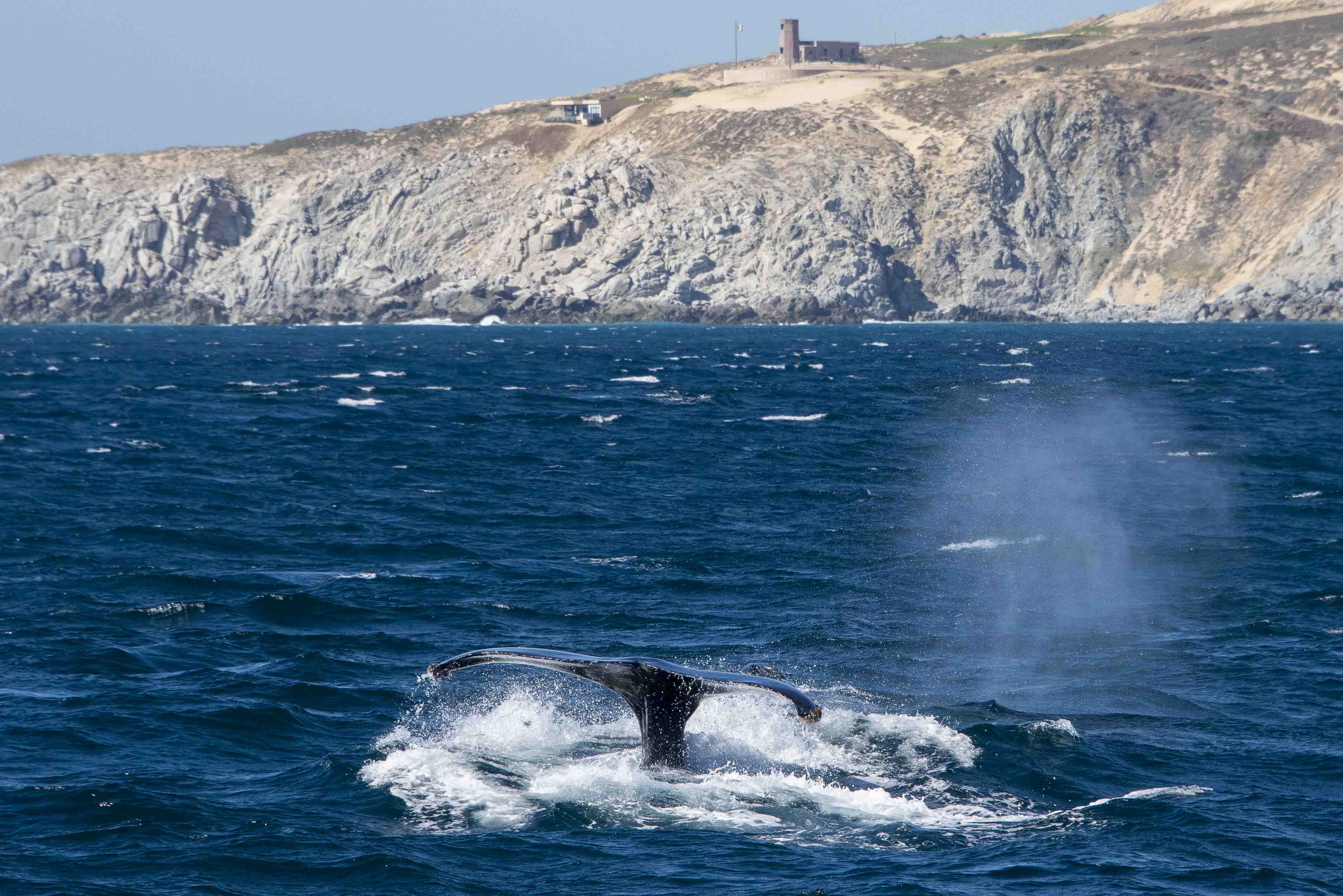
©Terry R. Thomas/www.nature-track.com
If we want to thrill to a breaching whale in the future, we need to get a handle on bycatch mortalities now.
I saw just how effective gillnets and trawl nets were while working as a fisheries technician many years ago in Utah. The gillnets were called experimental nets because they had different sized mesh to obtain a better sample of the target population. Strung out overnight perpendicular to shore, fish would swim into the nets, passing their heads through the mesh. However, their bodies would not follow and once the nylon mesh got behind their gill plates, it was game over. It did not matter what species we were targeting, whatever swam into that net usually died. Even though our work had a management purpose, every fish we weren’t interested in was considered bycatch. Trawl nets, funnel-shaped nets dragged behind a boat, were equally effective but left more of a chance of releasing non-target fish alive.
Wherever there is fishing, there is bycatch—the incidental capture of non-target species such as dolphins, sharks, whales, marine turtles and seabirds. There are also millions of fish (an estimated 40 percent of the total catch) of low commercial value that are caught, killed, and discarded annually. This is a huge problem that is helping to deplete fish, reptile, and mammal stocks in our oceans. Here are three examples.
As many as 300,000 cetaceans, whales, porpoises, and dolphins, needlessly die each year as bycatch. That sounds like a really big number and it is, but it may be low because many fishing trawlers don’t report, or sometimes even know, how many cetaceans they kill.
In the Mediterranean Sea, research has demonstrated that as many as 4,000 loggerhead turtles die each year, victims of bycatch. That is almost exactly ten percent of the estimated population in that area.
The vaquita, the world’s smallest porpoise, lives exclusively in the Gulf of California. Estimates place the remaining individuals at 20. Their sharp decline to extinction has been the direct result of so many of them becoming entangled in gillnets intended to catch fish and shrimp.
Bycatch is a ghastly wasteful result of the world’s insatiable appetite for fish. Most people just don’t know that it occurs or that the true cost of that wonderful halibut or cod fillet they purchase at the store may include a dolphin or two.
I have written before that wildlife (fish included) populations are finite and can be related to a bucket of water. When the bucket overflows, that is the surplus that can be harvested without impacting the population. Every bucket has holes though, that let water out the sides. Holes can include predation, disease, and accidents. If the bucket still overflows despite the holes, no problem. However, in our oceans, bycatch is considered the biggest hole in the bucket of many populations, draining them faster than they can be refilled.
There is an urgent need to start plugging holes and some headway has been made. For example, nets have been designed that allow most turtles to escape them. Circle hooks have also been designed that improve the catch rate for tuna, but do not readily hook turtles. However, political will to protect our ocean resources is still lacking. Many countries do not require their fishing fleets to employ these advances.
What can we do about it? As individuals, our best hope to move the needle will come from letting legislators know that we are concerned and would support any legislation that will reduce bycatch, including treaties with other nations. Asking grocers whether they know the source of their fish is another place to start. Finally, World Whale Day is celebrated every year on the third Sunday in February and this year, it takes place on February 15, 2026 (tomorrow, but activities have occurred all this past week). This is an opportunity to learn more about bycatch of cetaceans and what you can do about it.
Help Idaho Wildlife
When we traveled across the state in October 2017, we visited most of the Idaho Department of Fish and Game wildlife management areas. Most of the vehicles we saw using the wildlife management areas did not have wildlife plates. Buying wildlife plates is a great way for non-hunters and hunters alike to support wildlife-based recreation like birding.
C'mon folks, let's help Idaho's wildlife by proudly buying and displaying a wildlife license plate on each of our vehicles!
See below for information on Idaho plates. Most states have wildlife plates so if you live outside Idaho, check with your state's wildlife department or vehicle licensing division for availability of state wildlife plates where you live.
And tell them that you heard about it from Nature-track.com!
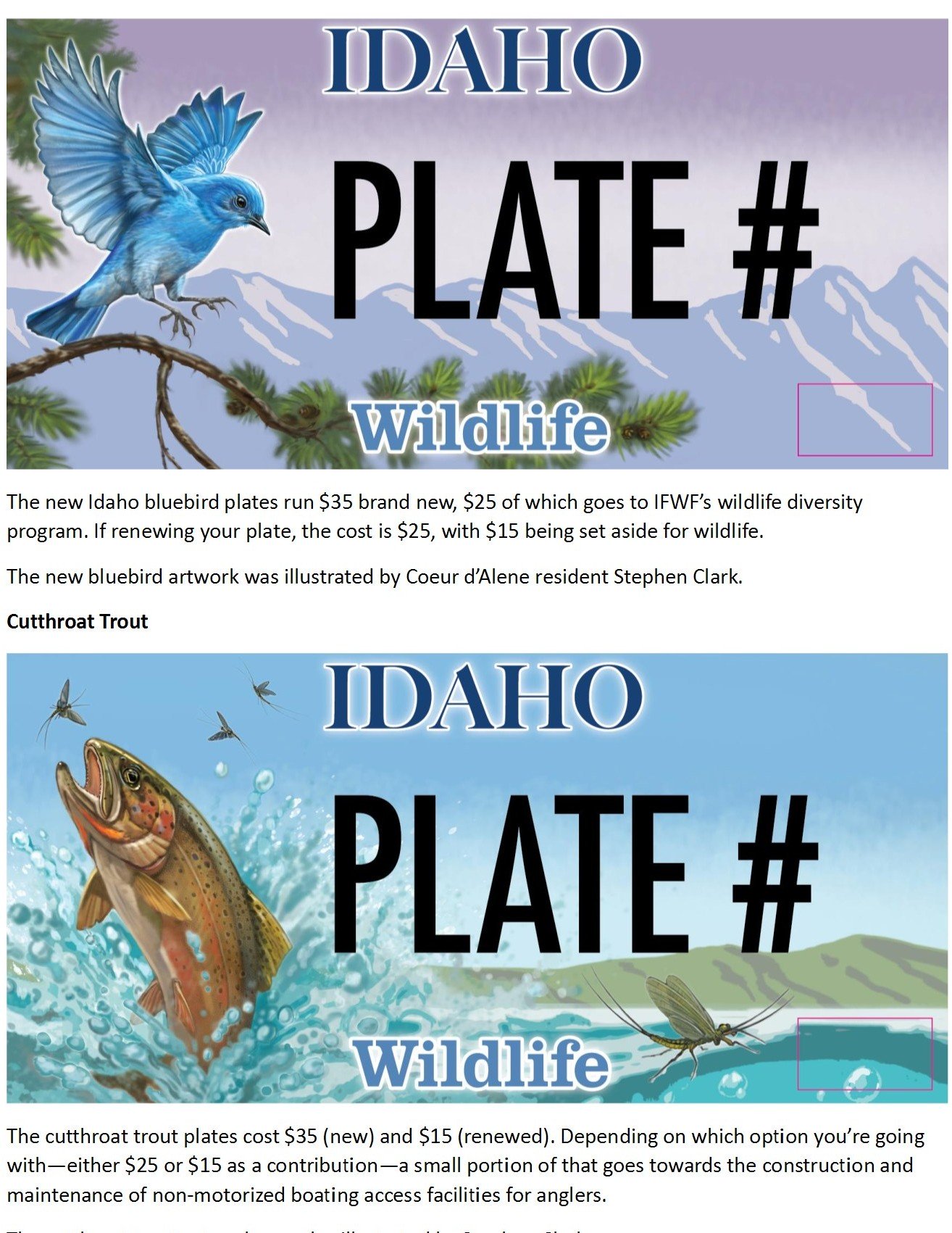
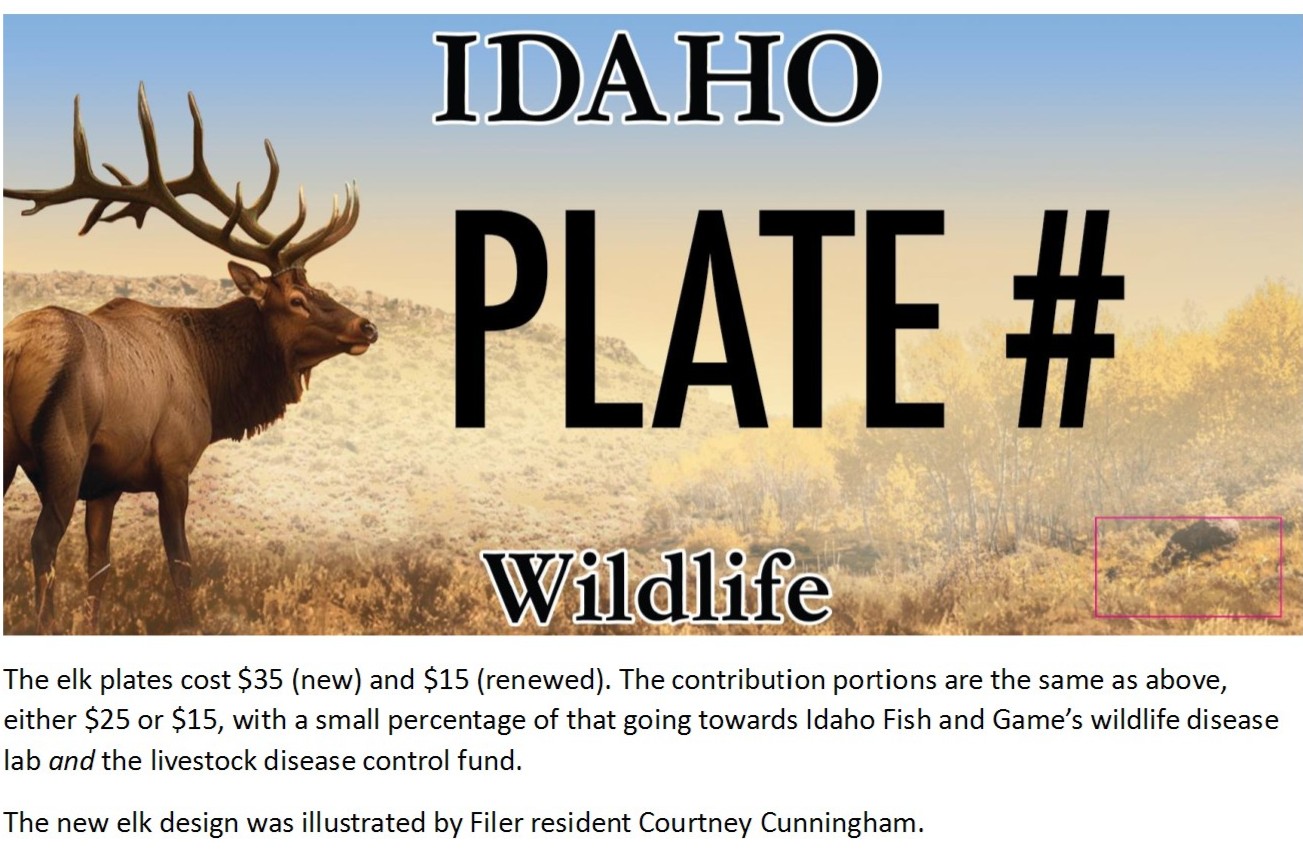
Wildlife License Plates
Great news! as of 2024, there are three NEW designs for license plates. They still are bluebird, cutthroat trout and elk, but they are beautiful.
Idaho Wildlife license plates provide essential funding that benefits the great diversity of native plants and wildlife that are not hunted, fished or trapped—over 10,000 species or 98% of Idaho’s species diversity. Game species that share the same habitats (such as elk, deer, antelope, sage-grouse, salmon, trout) also benefit from these specialty plates.
No state tax dollars are provided for wildlife diversity, conservation education and recreation programs. Neither are any revenues from the sale of hunting or fishing licenses spent on nongame species. Instead, these species depend on direct donations, federal grants, fundraising initiatives—and the Idaho Wildlife license plates.
Both my vehicles have Bluebird Plates. I prefer the bluebird because the nongame program gets 70 percent of the money from bluebird plates, but only 60 percent of the money from elk and trout plates - 10 percent of the money from elk plates supports wildlife disease monitoring and testing programs (to benefit the livestock industry) and 10 percent from cutthroat plates supports non-motorized boat access.
Incidentally, in 2014, the Idaho Legislature denied the Department of Fish and Game the ability to add new plates or even to change the name of the elk and cutthroat plates (very specific) to wildlife and fish plates, a move that would have allowed for changing images occasionally and generating more revenue. It would seem that they believe that we Idahoans don't want a well funded wildlife program.
I think it is time we let the Legislature know that Idahoan support wildlife funding and that we would like to see these generic plates come to fruition.
"WOW. What a phenomenal piece you wrote. You are amazing." Jennifer Jackson
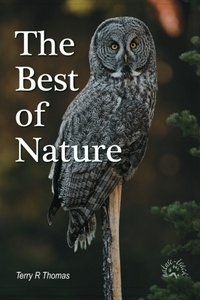
That is embarrassing, but actually a fairly typical response to my nature essays. Since The Best of Nature is created from the very best of 16 years of these nature essays published weekly in the Idaho Falls Post Register (online readership 70,000), it is a fine read. It covers a wide variety of topics including humorous glimpses of nature, philosophy, natural history, and conservation. Readers praise the style, breadth of subject matter and my ability to communicate complex and emotional topics in a relaxed and understandable manner.
Everyone can find something to love in this book. From teenagers to octogenarians, from the coffee shop to the school room, these nature essays are widely read and enjoyed.
Some of the essays here are my personal favorites, others seemed to strike a chord with readers. Most have an important message or lesson that will resonate with you. They are written with a goal to simultaneously entertain and educate about the wonderful workings of nature. Some will make you laugh out loud and others will bring a tear to the eye and warm your heart.
Readers Write:
"You hit a home run with your article on, Big Questions in Nature. It should be required reading for everyone who has lost touch with nature...great job!" Joe Chapman
"We enjoyed your column, Bloom Where Planted. Some of the best writing yet. The Post Register is fortunate to have your weekly columns." Lou Griffin.
To read more and to order a copy, click here or get the Kindle version
Copies are also available at:
Post Register
Island Park Builders Supply (upstairs)
Barnes and Noble in Idaho Falls
Harriman State Park, Island Park
Museum of Idaho
Valley Books, Jackson Wyoming
Avocet Corner Bookstore, Bear River National Wildlife Refuge, Brigham City, Utah
Craters of the Moon National Monument Bookstore, Arco, Idaho