Frankincense and Myrrh
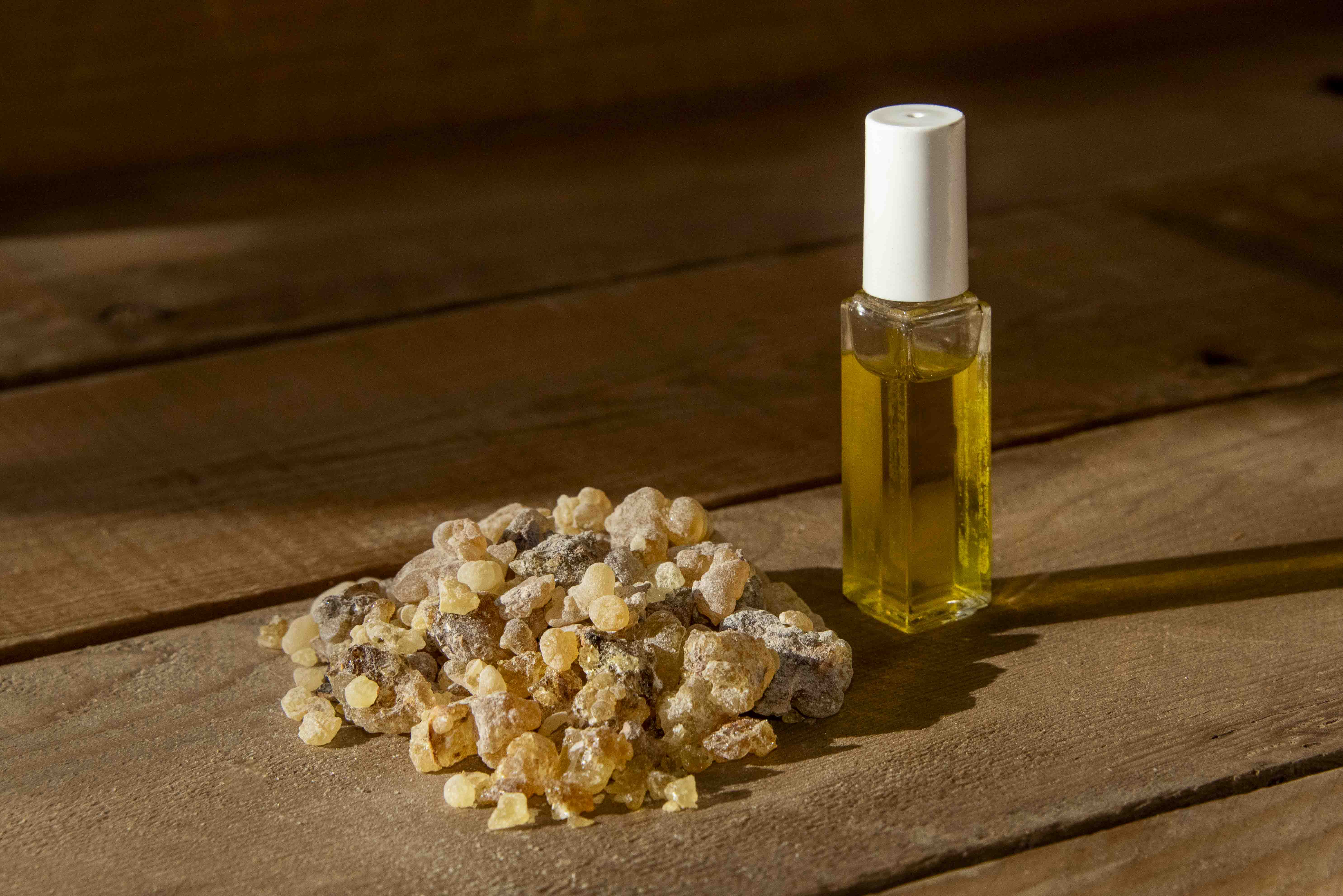
©Terry R. Thomas/www.nature-track.com
Both frankincense and myrrh (frankincense shown) come as small pellets called tears or as oils.
In perhaps the best-known story in the world, wise men, or Magi, brought gifts to the young Christ child over 2,000 years ago. Without trying, just about everyone who pays any attention to Christmas can readily recite what those gifts were: gold, frankincense, and myrrh, listed in that order in the only account of the event found in the Gospel of St. Mathew, chapter 2. These were gifts often given to kings in that era, indicating that even some “gentiles” considered Jesus a king.
We all know what gold is and it was just as sought after then as it is now. What were these other two gifts, frankincense and myrrh?
Both are fragrant resins of specific trees growing on the Arabian Peninsula and south on the Horn of Africa (Somalia and Ethiopia). They are harvested like maple sap that is used to make real maple syrup. Once the tree reaches a point where it can produce sap (about 10 years old for frankincense), the trees are tapped (the bark cut through with a blade allowing sap to drip from the wound) up to three times a year with the last tapping producing the highest quality sap. The sap dries on the tree and the “tears” or hardened sap, are then collected and graded.
There are at least six species of frankincense trees that are harvested commercially. Each species produces a sap with unique characteristics. During biblical times, Boswellia sacra was likely the most valued. Myrrh mostly comes from Commiphora myrrha, a thorny shrub or small tree.
As a gift, these two products were perfect. They were highly valued for at least 5,000 years prior to the trek of the Magi. Egyptians used hundreds of pounds of frankincense for each important burial. Archeologists noted a strong scent of frankincense after opening the tomb of an Egyptian king 3,000 years after it was sealed. Greeks honored their heroes with frankincense and myrrh and the Chinese traded porcelain to obtain them. It is said that the Silk Road and the Incense Trade Routes came to be largely because of trade in frankincense and myrrh, and even Moses was commanded to make an anointing oil using myrrh as a base and a sacred perfume of frankincense (Exodus 30).
The value of these two products at Jesus’ time is hard to pin down, but some scholars say that both were at their peak then. They put frankincense at $500 and myrrh at $4,000 a pound in today’s dollars, making both possibly more valuable than gold at the time. That would also make the order of their mention in St. Mathew to be from least to most valuable, not the case today.
In ancient times, both myrrh and frankincense were used as incense for religious purposes, but they had other uses as well. The Chinese used them to cure respiratory problems and diaper rash. Romans used frankincense to heal skin issues. Myrrh was used as an oil for topical application and there is evidence that it does have antimicrobial properties. Both were used (and still are) as a spice for cooking and for perfumes, although at the price, few people got to enjoy it.
Both frankincense and myrrh are still popular today. Thousands of tons of frankincense are traded every year to be used in religious ceremonies as incense in thuribles (“metal incense burner suspended from chains, in which incense is burned during worship services” Wikipedia) and by makers of perfumes, natural medicines, and essential oils. Pharmaceutical grade myrrh may sell for over $225/pound.
However, over-exploitation is taking a toll. Research shows that trees that are tapped three times a year produce seeds with a 16 percent germination rate compared to 80 percent germination of seeds from unharvested trees. In 1998, the International Union for Conservation of Nature warned that one of the primary frankincense species, Boswellia sacra, is "near threatened" because of over exploitation and habitat loss.
The scent of frankincense is a heady perfume, and it is easy to see why it became so popular. Myrrh is said to be equally intoxicating. Truly, in their day, these were both gifts for kings, earthly and otherwise.
Merry Christmas.
Help Idaho Wildlife
When we traveled across the state in October 2017, we visited most of the Idaho Department of Fish and Game wildlife management areas. Most of the vehicles we saw using the wildlife management areas did not have wildlife plates. Buying wildlife plates is a great way for non-hunters and hunters alike to support wildlife-based recreation like birding.
C'mon folks, let's help Idaho's wildlife by proudly buying and displaying a wildlife license plate on each of our vehicles!
See below for information on Idaho plates. Most states have wildlife plates so if you live outside Idaho, check with your state's wildlife department or vehicle licensing division for availability of state wildlife plates where you live.
And tell them that you heard about it from Nature-track.com!
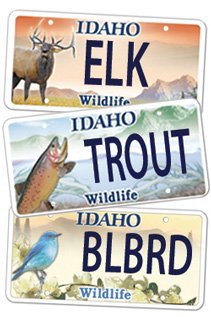
Wildlife License Plates
Great news! as of 2024, there are three NEW designs for license plates. They still are bluebird, cutthroat trout and elk, but they are beautiful.
Idaho Wildlife license plates provide essential funding that benefits the great diversity of native plants and wildlife that are not hunted, fished or trapped—over 10,000 species or 98% of Idaho’s species diversity. Game species that share the same habitats (such as elk, deer, antelope, sage-grouse, salmon, trout) also benefit from these specialty plates.
No state tax dollars are provided for wildlife diversity, conservation education and recreation programs. Neither are any revenues from the sale of hunting or fishing licenses spent on nongame species. Instead, these species depend on direct donations, federal grants, fundraising initiatives—and the Idaho Wildlife license plates.
Both my vehicles have Bluebird Plates. I prefer the bluebird because the nongame program gets 70 percent of the money from bluebird plates, but only 60 percent of the money from elk and trout plates - 10 percent of the money from elk plates supports wildlife disease monitoring and testing programs (to benefit the livestock industry) and 10 percent from cutthroat plates supports non-motorized boat access.
Incidentally, in 2014, the Idaho Legislature denied the Department of Fish and Game the ability to add new plates or even to change the name of the elk and cutthroat plates (very specific) to wildlife and fish plates, a move that would have allowed for changing images occasionally and generating more revenue. It would seem that they believe that we Idahoans don't want a well funded wildlife program.
I think it is time we let the Legislature know that Idahoan support wildlife funding and that we would like to see these generic plates come to fruition.
"WOW. What a phenomenal piece you wrote. You are amazing." Jennifer Jackson
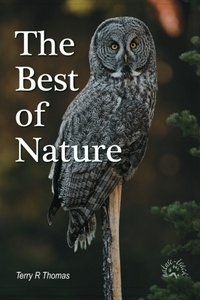
That is embarrassing, but actually a fairly typical response to my nature essays. Since The Best of Nature is created from the very best of 16 years of these nature essays published weekly in the Idaho Falls Post Register (online readership 70,000), it is a fine read. It covers a wide variety of topics including humorous glimpses of nature, philosophy, natural history, and conservation. Readers praise the style, breadth of subject matter and my ability to communicate complex and emotional topics in a relaxed and understandable manner.
Everyone can find something to love in this book. From teenagers to octogenarians, from the coffee shop to the school room, these nature essays are widely read and enjoyed.
Some of the essays here are my personal favorites, others seemed to strike a chord with readers. Most have an important message or lesson that will resonate with you. They are written with a goal to simultaneously entertain and educate about the wonderful workings of nature. Some will make you laugh out loud and others will bring a tear to the eye and warm your heart.
Readers Write:
"You hit a home run with your article on, Big Questions in Nature. It should be required reading for everyone who has lost touch with nature...great job!" Joe Chapman
"We enjoyed your column, Bloom Where Planted. Some of the best writing yet. The Post Register is fortunate to have your weekly columns." Lou Griffin.
To read more and to order a copy, click here or get the Kindle version
Copies are also available at:
Post Register
Island Park Builders Supply (upstairs)
Barnes and Noble in Idaho Falls
Harriman State Park, Island Park
Museum of Idaho
Valley Books, Jackson Wyoming
Avocet Corner Bookstore, Bear River National Wildlife Refuge, Brigham City, Utah
Craters of the Moon National Monument Bookstore, Arco, Idaho