Seeds
©Terry R. Thomas/www.nature-track.com
The beautiful Sitka columbine moves its species forward by producing abundant hard black seeds. Most plants produce seeds.
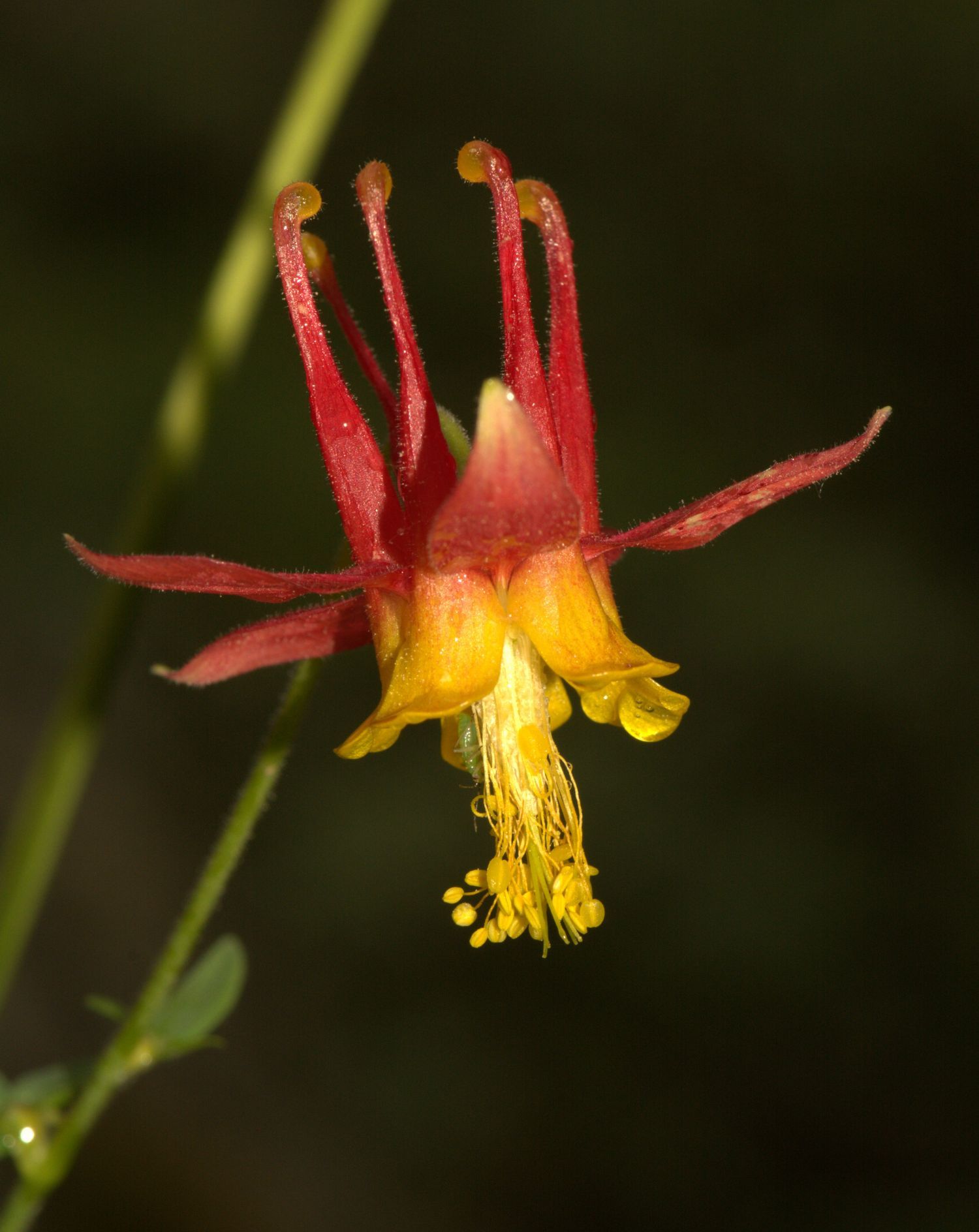
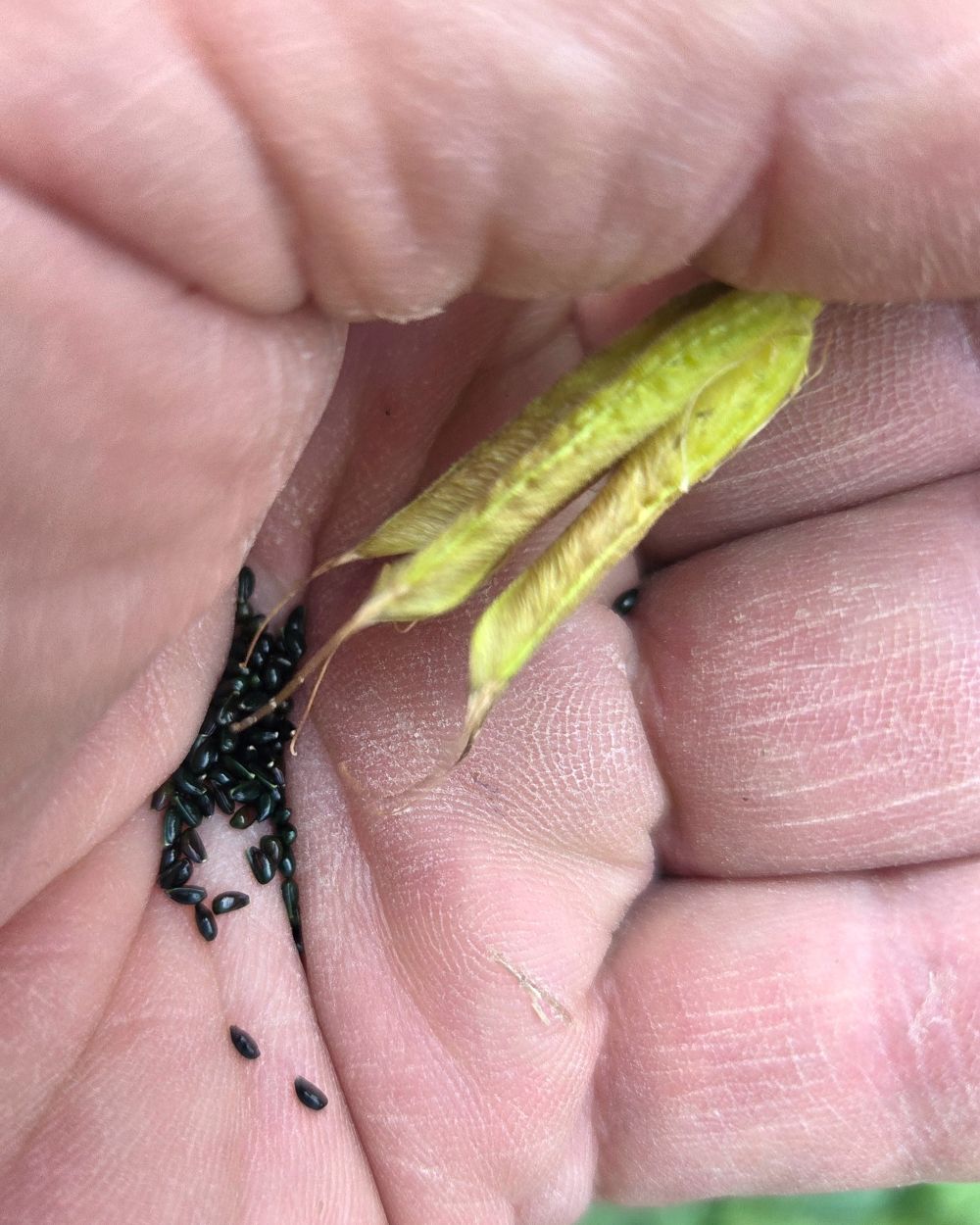
In my garden, the beautiful flowers of the Sitka columbine with their red sepals, long red spurs, a yellow petals, and multiple yellow stamens, have been fading over the past several weeks. Now the developing seed pods, looking like five jester hats, were in various stages of development. The ripest ones were brown and dry and I carefully tipped each one over a plastic bag. Hard black seeds about one millimeter in diameter poured into the container sounding like a gentle rain on a roof. I looked at the Colorado blue columbine in full bloom nearby and realized that when I collected those seeds, they would look exactly the same, yet would yield a different plant and I marveled that a seed could grow into a predetermined plant. Amazing.
In today’s world, seeds are the main method of reproduction among plants. There are plants, such as mosses and ferns, that produce via spores and many plants routinely produce vegetatively as well, but about 80 percent (about 352,000 species) of plants are angiosperms, with another 1,000 species of gymnosperms which all reproduce by seed. According to Encyclopedia Britannica, “The key difference between angiosperms and gymnosperms is how their seeds are developed. The seeds of angiosperms develop in the ovaries of flowers and are surrounded by a protective fruit. Gymnosperm seeds are usually formed in unisexual cones, known as strobili, and the plants lack fruits and flowers.”
Seeds come in an incredible array of shapes and sizes. The seed of the coco de mer, sometimes called the double coconut, produces the largest and heaviest seeds by far. This native to two islands of the Seychelles off Africa’s east coast, looks like a human pelvis and can weigh an average of around 40 pounds (a coconut weighs seven to eight pounds), is up to 20 inches long and may take seven years to reach maturity.
Contrast this seed with those of the jewel orchid, native to Fiji, New Caledonia, and Samoa. This orchid has seeds that measure 0.05 mm. If you can’t visualize something that small, think of dust on your car after driving on a dirt road. Orchids are famous for small seeds, but the jewel orchid has the smallest seeds in the world with seeds so small they are nearly invisible to our eye. For comparison, tiny mustard seeds, like those referred to in the Bible, are a whopping one to two millimeters in diameter.
Why are these two seeds, one a giant and the other so small as to be nearly invisible, so different? It relates to a problem all seed plants have—how to get your seeds to a place where they can grow and perpetuate their genetic line.
The coco de mer, which lives in shady jungle in nutrient poor soil, has adopted a strategy of producing a seed with lots of food reserves to sustain the seedling for over two years. In addition, the mother tree may only produce ten or fewer seeds at a time and actually cares for the seedling. The heavy seed falls straight down beneath its mom and usually stays there. The leaves of the mother tree funnel water and nutrients directly to the seed and later, the seedling. Research has shown that this concentration of resources increases nutrients by 50 percent in the zone the seeds fall in. Lacking large animals to move the seeds, this strategy seems to work.
The jewel orchid takes a different approach. With millions of tiny seeds in a single capsule, it depends upon wind to disperse the seeds. This minimalist approach has a cost. These seeds have zero food reserves, depending instead on a fungal mycorrhizal relationship to supply the nutrition for growth.
Seeds are marvels and wonders of nature. If plants had found a different way to reproduce sexually, much of the life on Earth, including humans, would find survival much more challenging. More on that next time.
Help Idaho Wildlife
When we traveled across the state in October 2017, we visited most of the Idaho Department of Fish and Game wildlife management areas. Most of the vehicles we saw using the wildlife management areas did not have wildlife plates. Buying wildlife plates is a great way for non-hunters and hunters alike to support wildlife-based recreation like birding.
C'mon folks, let's help Idaho's wildlife by proudly buying and displaying a wildlife license plate on each of our vehicles!
See below for information on Idaho plates. Most states have wildlife plates so if you live outside Idaho, check with your state's wildlife department or vehicle licensing division for availability of state wildlife plates where you live.
And tell them that you heard about it from Nature-track.com!
Wildlife License Plates
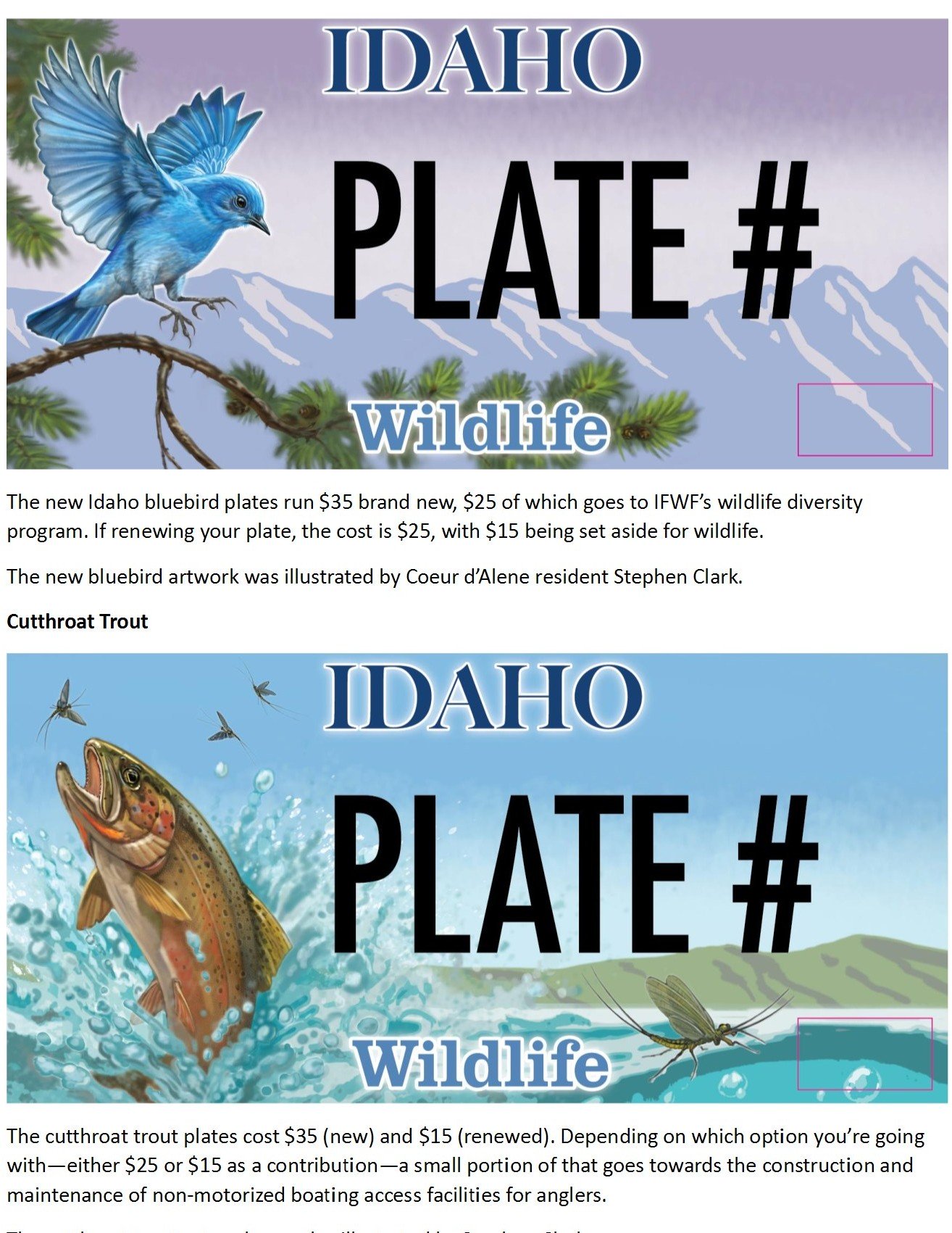
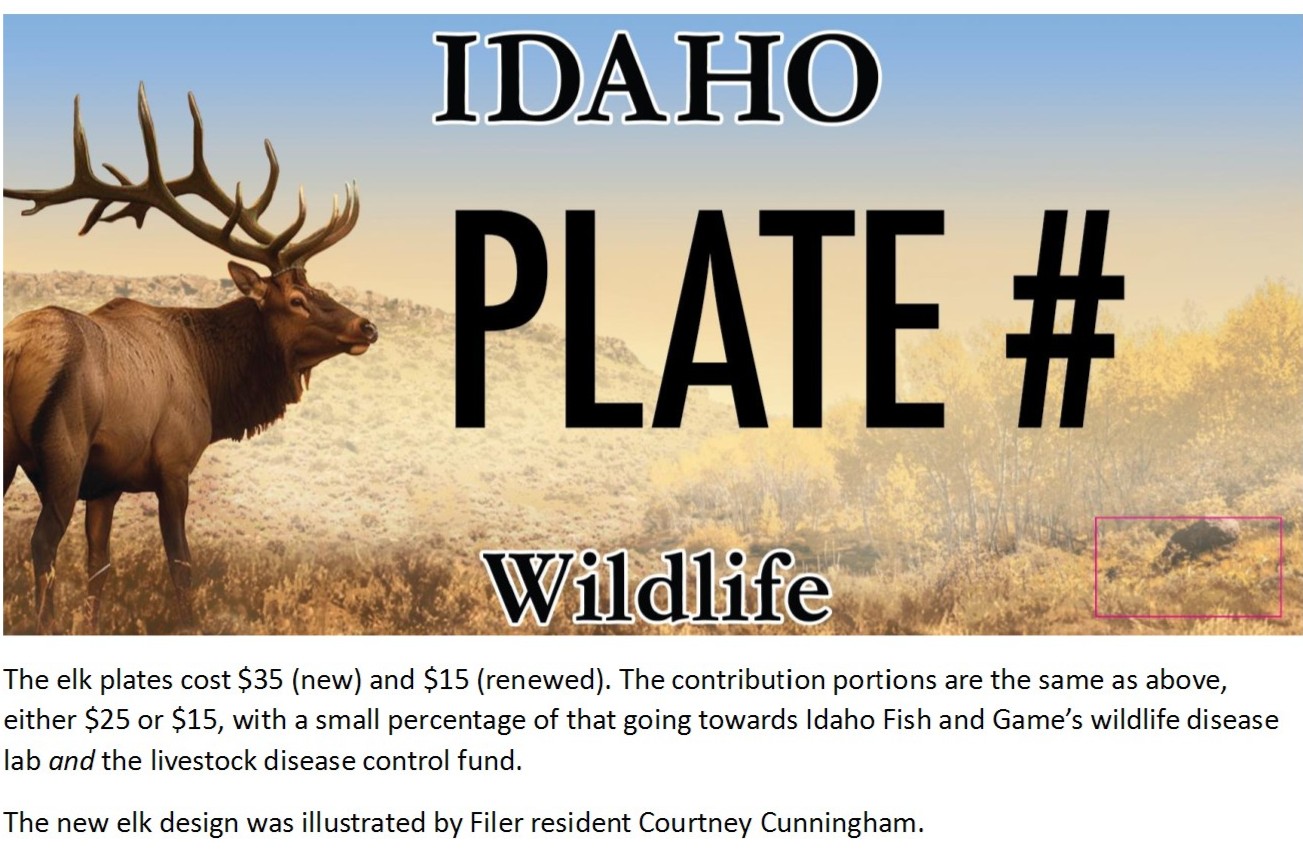
Great news! as of 2024, there are three NEW designs for license plates. They still are bluebird, cutthroat trout and elk, but they are beautiful.
Idaho Wildlife license plates provide essential funding that benefits the great diversity of native plants and wildlife that are not hunted, fished or trapped—over 10,000 species or 98% of Idaho’s species diversity. Game species that share the same habitats (such as elk, deer, antelope, sage-grouse, salmon, trout) also benefit from these specialty plates.
No state tax dollars are provided for wildlife diversity, conservation education and recreation programs. Neither are any revenues from the sale of hunting or fishing licenses spent on nongame species. Instead, these species depend on direct donations, federal grants, fundraising initiatives—and the Idaho Wildlife license plates.
Both my vehicles have Bluebird Plates. I prefer the bluebird because the nongame program gets 70 percent of the money from bluebird plates, but only 60 percent of the money from elk and trout plates - 10 percent of the money from elk plates supports wildlife disease monitoring and testing programs (to benefit the livestock industry) and 10 percent from cutthroat plates supports non-motorized boat access.
Incidentally, in 2014, the Idaho Legislature denied the Department of Fish and Game the ability to add new plates or even to change the name of the elk and cutthroat plates (very specific) to wildlife and fish plates, a move that would have allowed for changing images occasionally and generating more revenue. It would seem that they believe that we Idahoans don't want a well funded wildlife program.
I think it is time we let the Legislature know that Idahoan support wildlife funding and that we would like to see these generic plates come to fruition.
"WOW. What a phenomenal piece you wrote. You are amazing." Jennifer Jackson
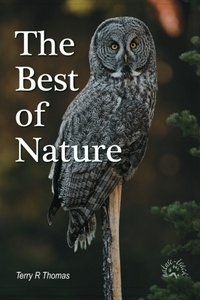
That is embarrassing, but actually a fairly typical response to my nature essays. Since The Best of Nature is created from the very best of 16 years of these nature essays published weekly in the Idaho Falls Post Register (online readership 70,000), it is a fine read. It covers a wide variety of topics including humorous glimpses of nature, philosophy, natural history, and conservation. Readers praise the style, breadth of subject matter and my ability to communicate complex and emotional topics in a relaxed and understandable manner.
Everyone can find something to love in this book. From teenagers to octogenarians, from the coffee shop to the school room, these nature essays are widely read and enjoyed.
Some of the essays here are my personal favorites, others seemed to strike a chord with readers. Most have an important message or lesson that will resonate with you. They are written with a goal to simultaneously entertain and educate about the wonderful workings of nature. Some will make you laugh out loud and others will bring a tear to the eye and warm your heart.
Readers Write:
"You hit a home run with your article on, Big Questions in Nature. It should be required reading for everyone who has lost touch with nature...great job!" Joe Chapman
"We enjoyed your column, Bloom Where Planted. Some of the best writing yet. The Post Register is fortunate to have your weekly columns." Lou Griffin.
To read more and to order a copy, click here or get the Kindle version
Copies are also available at:
Post Register
Island Park Builders Supply (upstairs)
Barnes and Noble in Idaho Falls
Harriman State Park, Island Park
Museum of Idaho
Valley Books, Jackson Wyoming
Avocet Corner Bookstore, Bear River National Wildlife Refuge, Brigham City, Utah
Craters of the Moon National Monument Bookstore, Arco, Idaho