St. Johnswort
©Terry R. Thomas/www.nature-track.com
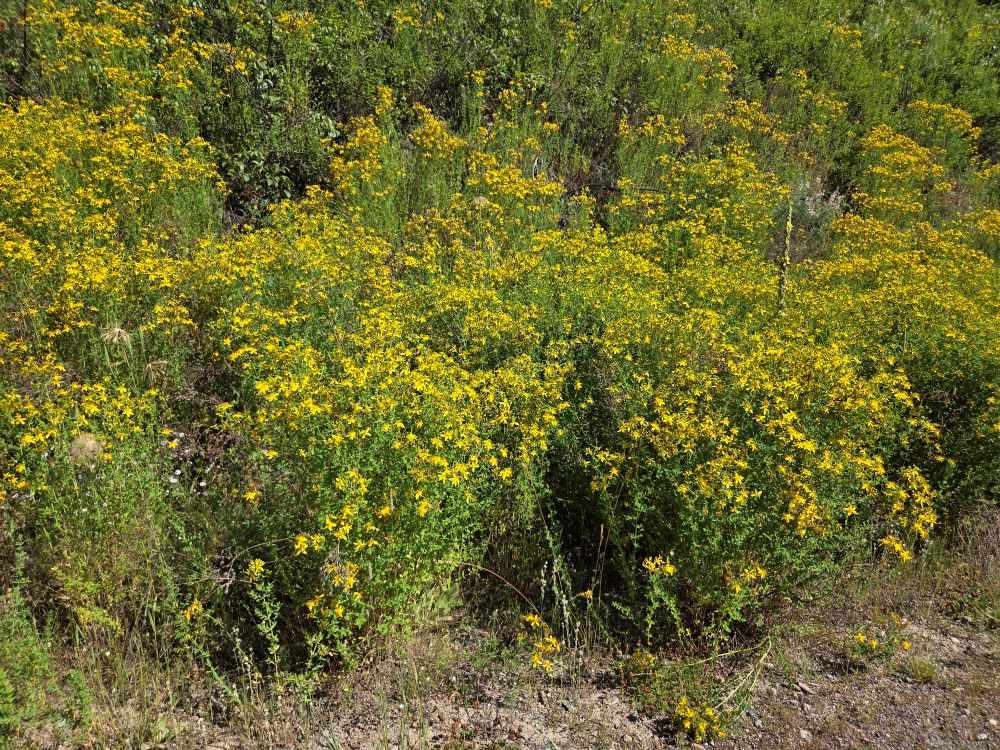
St Johnswort, hypericum perforatum, is a pretty plant, but one that belongs in Europe or Africa where it is native. Here it is a threat to wildlife and rangelands.
About a month ago, we drove down to the Warm River Spring and former fish hatchery site in Island Park. This is a favorite place for us and I have been saddened to see noxious and obnoxious weeds such as spotted knapweed, hoary alyssum, yellow toadflax, plumeless and musk thistles, and common mullein, gaining ground each year in spite of efforts (mine and others) to control them. This trip though, I noticed large patches of a perennial shrublike herbaceous plant (dies back to the ground each year) with yellow flowers. I had never noticed it there before, nor did I recognize it as a native. I did a little research and discovered that it is St Johnswort, or St John’s Wort, Hypericum perforatum, a native to Europe, Asia, and Africa.
This didn’t seem like it was a good thing and further research proved that to be the case. This plant came to this country for the first time likely in 1696, brought here by German colonists who transported it with them as an herb used in mystic rites and, “to exorcise the devil, protect newborns, and ward off imps and demons of melancholy.” Along with English settlers, they brought seeds for gardens, from which the plant promptly escaped from Maine to Florida. It was introduced into California in 1900 and by 1930 it was blamed for severe economic losses because of impacts on pasture, rangelands and livestock. Today it is in nearly every state and listed as a noxious weed in California, Colorado, Montana, Nevada, Oregon, South Dakota, Washington, Wisconsin, and Wyoming. Several northern Idaho counties list it as a noxious weed as well.
St Johnswort is a member of a genus with more than 400 species and there are native species of this genus in the continental United States. And that makes it sometimes challenging to know which specific species is being referred to. That makes the use of the scientific name very important. There are many nurseries that sell St Johnswort (St John’s Wort) of other species than Hypericum perforatum. Not all of these are invasive. However, I did find at least one popular nursery in Idaho Falls that actively promotes the sale of Hypericum perforatum as a garden plant.
And therein lies the problem. One of the most common ways for invasive plants to become established is through the garden and landscape trades. Plants such as purple loosestrife, giant hog weed, reed canary grass, kudzu, Japanese knotweed, and many more were exotic plants valued for their ornamental flowers, foliage, or utility (e.g., erosion control, shade, ground cover). But once loose in a new environment without predators and pathogens, they went wild.
In the case of St. Johnswort, not only is it a pretty specimen plant, it is also sought after as a medicinal herb. In Europe it is approved for treatment for depression and has been used for treatment of wounds for over a thousand years.
The dark side to this plant, and again I am talking specifically about Hypericum perforatum, is as large as a black hole. It can readily take over disturbed areas. Montana reports over 500,000 acres lost to this weed. It spreads by rhizomes forming dense monocultures and each plant can produce 10-30,000 seeds which might persist in the soil for 30 years, just waiting for a chance to re-establish a colony wiped out through intensive control measures. The Forest Service says it will not invade established vegetation, but that wasn’t what I saw on Warm River.
From a livestock and wildlife standpoint, consuming even relatively small amounts of this plant can lead to neurological effects and a sensitivity to light that causes, “photosensitization, blisters, and lesions; especially in light-skinned animals. More severe symptoms include loss of appetite, diarrhea, blindness, convulsions, coma and death (US Forest Service).”
Why St. Johnswort isn’t listed as a noxious weed in Idaho is a bit of a mystery to me. Five of our surrounding neighbors recognize it as such and take aggressive measures to control it. It seems foolish to wait until it becomes a huge problem before taking action. It is a lesson though, that each of us needs to be cautious with the plants we choose to landscape with. Selecting native plants is always a safe way to go, but do your research on exotics.
Help Idaho Wildlife
When we traveled across the state in October 2017, we visited most of the Idaho Department of Fish and Game wildlife management areas. Most of the vehicles we saw using the wildlife management areas did not have wildlife plates. Buying wildlife plates is a great way for non-hunters and hunters alike to support wildlife-based recreation like birding.
C'mon folks, let's help Idaho's wildlife by proudly buying and displaying a wildlife license plate on each of our vehicles!
See below for information on Idaho plates. Most states have wildlife plates so if you live outside Idaho, check with your state's wildlife department or vehicle licensing division for availability of state wildlife plates where you live.
And tell them that you heard about it from Nature-track.com!
Wildlife License Plates
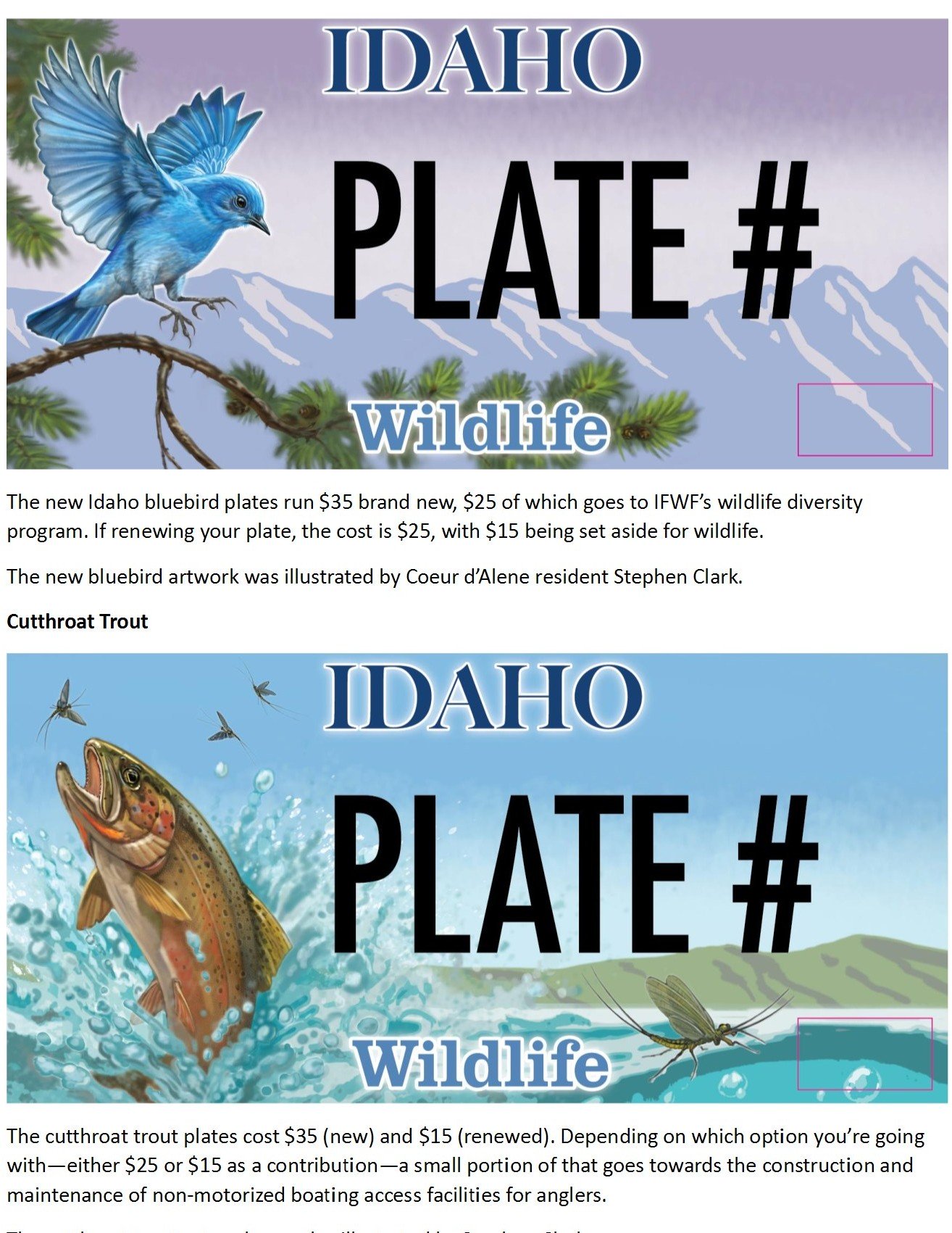
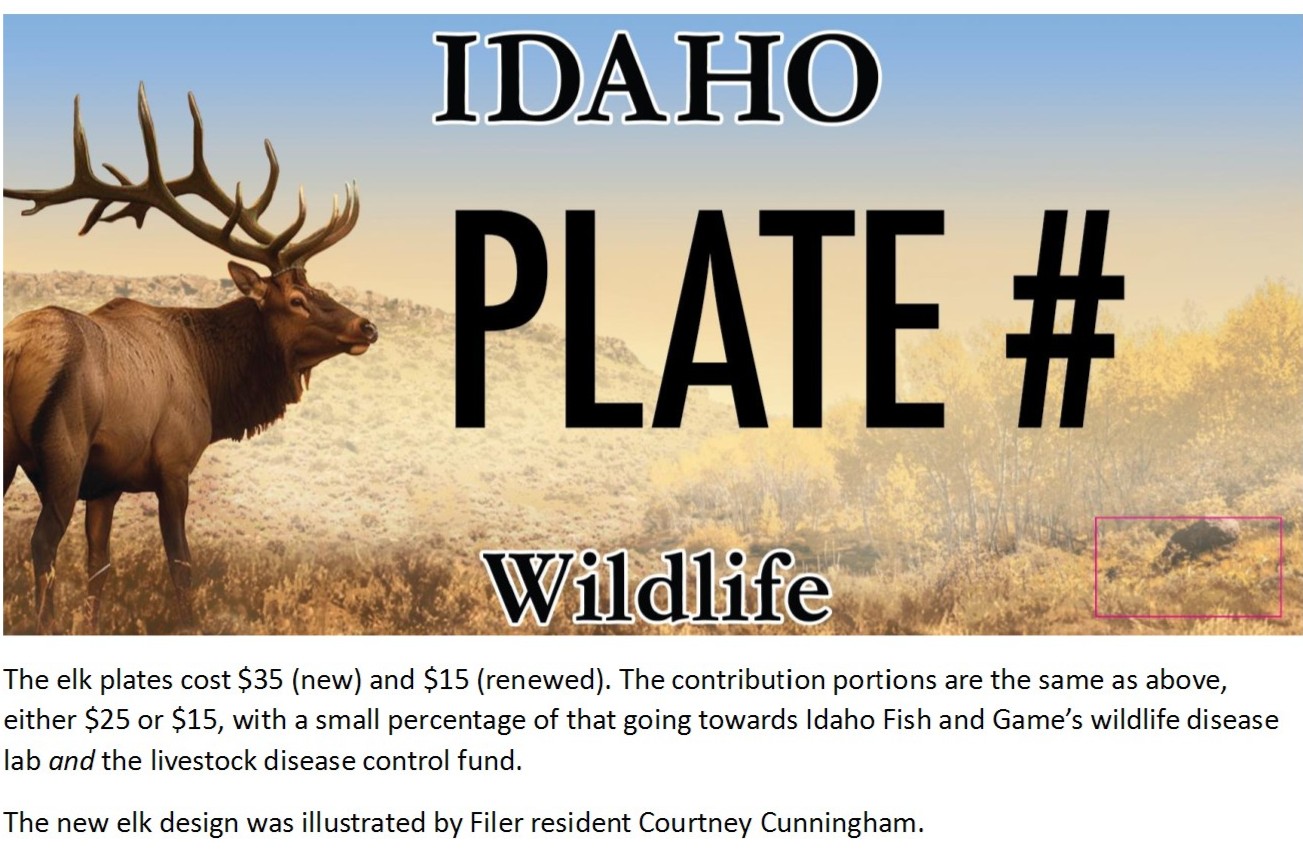
Great news! as of 2024, there are three NEW designs for license plates. They still are bluebird, cutthroat trout and elk, but they are beautiful.
Idaho Wildlife license plates provide essential funding that benefits the great diversity of native plants and wildlife that are not hunted, fished or trapped—over 10,000 species or 98% of Idaho’s species diversity. Game species that share the same habitats (such as elk, deer, antelope, sage-grouse, salmon, trout) also benefit from these specialty plates.
No state tax dollars are provided for wildlife diversity, conservation education and recreation programs. Neither are any revenues from the sale of hunting or fishing licenses spent on nongame species. Instead, these species depend on direct donations, federal grants, fundraising initiatives—and the Idaho Wildlife license plates.
Both my vehicles have Bluebird Plates. I prefer the bluebird because the nongame program gets 70 percent of the money from bluebird plates, but only 60 percent of the money from elk and trout plates - 10 percent of the money from elk plates supports wildlife disease monitoring and testing programs (to benefit the livestock industry) and 10 percent from cutthroat plates supports non-motorized boat access.
Incidentally, in 2014, the Idaho Legislature denied the Department of Fish and Game the ability to add new plates or even to change the name of the elk and cutthroat plates (very specific) to wildlife and fish plates, a move that would have allowed for changing images occasionally and generating more revenue. It would seem that they believe that we Idahoans don't want a well funded wildlife program.
I think it is time we let the Legislature know that Idahoan support wildlife funding and that we would like to see these generic plates come to fruition.
"WOW. What a phenomenal piece you wrote. You are amazing." Jennifer Jackson
That is embarrassing, but actually a fairly typical response to my nature essays. Since The Best of Nature is created from the very best of 16 years of these nature essays published weekly in the Idaho Falls Post Register (online readership 70,000), it is a fine read. It covers a wide variety of topics including humorous glimpses of nature, philosophy, natural history, and conservation. Readers praise the style, breadth of subject matter and my ability to communicate complex and emotional topics in a relaxed and understandable manner.
Everyone can find something to love in this book. From teenagers to octogenarians, from the coffee shop to the school room, these nature essays are widely read and enjoyed.
Some of the essays here are my personal favorites, others seemed to strike a chord with readers. Most have an important message or lesson that will resonate with you. They are written with a goal to simultaneously entertain and educate about the wonderful workings of nature. Some will make you laugh out loud and others will bring a tear to the eye and warm your heart.
Readers Write:
"You hit a home run with your article on, Big Questions in Nature. It should be required reading for everyone who has lost touch with nature...great job!" Joe Chapman
"We enjoyed your column, Bloom Where Planted. Some of the best writing yet. The Post Register is fortunate to have your weekly columns." Lou Griffin.
To read more and to order a copy, click here or get the Kindle version
Copies are also available at:
Post Register
Island Park Builders Supply (upstairs)
Barnes and Noble in Idaho Falls
Harriman State Park, Island Park
Museum of Idaho
Valley Books, Jackson Wyoming
Avocet Corner Bookstore, Bear River National Wildlife Refuge, Brigham City, Utah
Craters of the Moon National Monument Bookstore, Arco, Idaho