Seeds Part 2
©Terry R. Thomas/www.nature-track.com
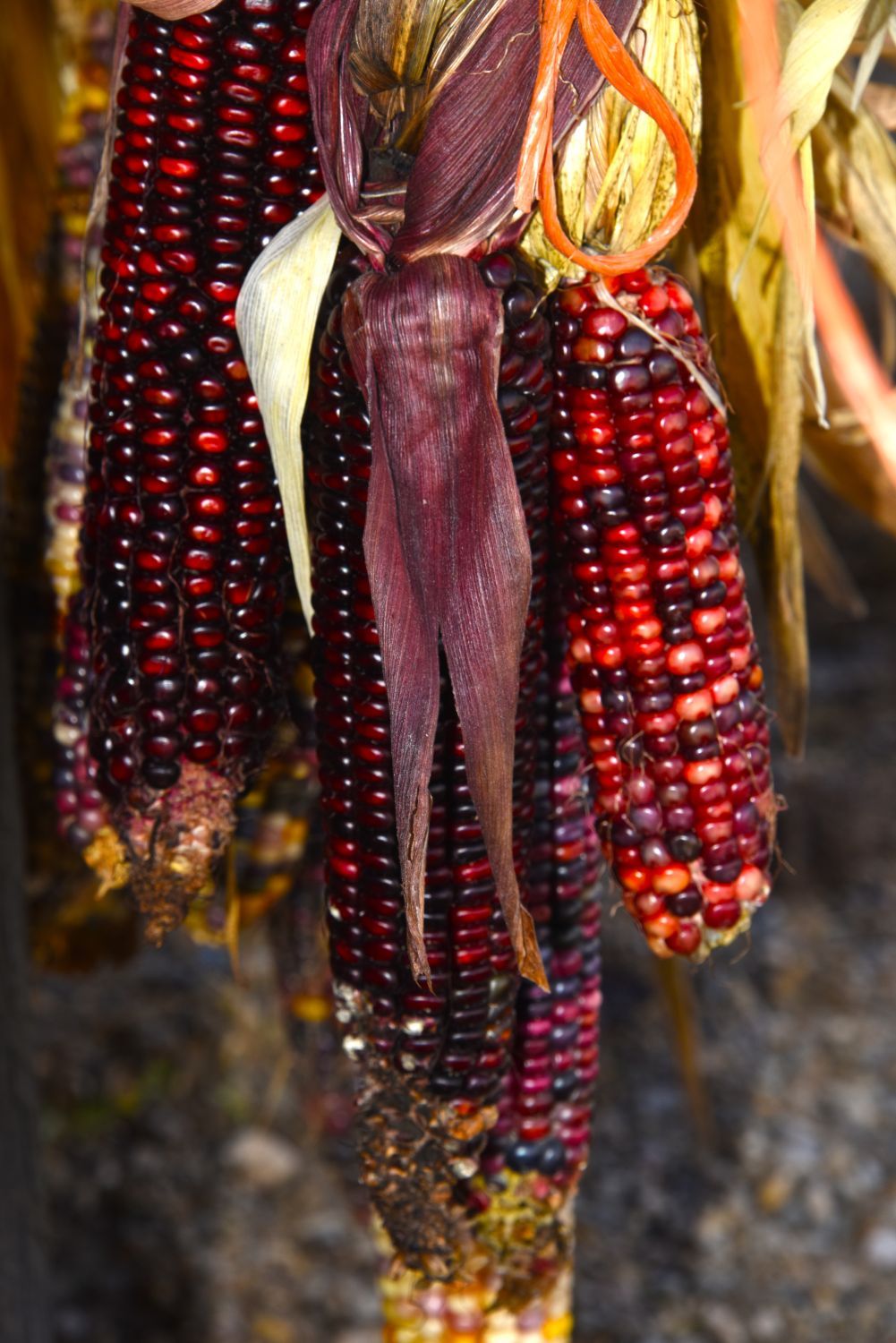
Corn, along with rice, beans, and wheat, provide nearly 60 percent of the calories that humans consume daily.
Whether it is the giant seed of the coco de mer or the dust-like seed of the jewel orchid or any size seed in-between, each seed contains an embryo, a tiny plant with all the genetic material necessary to grow into its parent plant. That is relatively easy to envision with a 40-pound coco de mer seed, but much harder with the jewel orchid or similar plants such as sagebrush, which may have two million seeds per pound. While the embryo doesn’t resemble the parent plant, it does have leaves called cotyledons, stem, a plumule (embryonic shoot) which grows up between cotyledons and contains the primordial true leaves, and a root, called a radicle.
Although this tiny plant is actually present in the seed, it is rarely visible to the naked eye. But a properly prepared section of seed examined under the microscope will reveal its presence. A few seeds though do show parts. For instance, the two halves of a peanut are actually mostly the two cotyledons.
Although the stories from the 19th century about seeds discovered in Egyptian tombs and several thousand years old, growing and producing seeds of their own have been shown to be false, seeds can last a long time in the soil, waiting for certain conditions before germinating. Some seeds can last over 50 years, making weed control a constant battle.
This delayed germination is called dormancy. Dormancy is an internal block or “rule” coded into the seed. It requires a specific trigger to initiate germination. That trigger might be cold, fire, or a chemical or physical change to the seed coat. For instance, when I collected bitterbush seed and sent it in so a nursery could send me back seedlings ready for planting, the nursery had to put the seed through a several week moist and cold stratification (at 36 degrees Fahrenheit, mimicking going through winter) in order to break dormancy. A few seeds that we planted required scarification where the seed coat needed abrasion in order to break dormancy.
This is different from quiescence. Sometimes seeds do not germinate because outside conditions are not right. It might be too cold, too hot, too dry, or not enough oxygen. However, as soon as conditions change for the better, the seed is ready to grow.
There have been a few scientifically documented germinations from seeds that were very old though. Perhaps the most famous is a Judean date palm named Methuselah. In 2005, this seed was 2,000 years old and the remnant of an extinct species that was once an essential part of the diet of those living in Palestine and Judea. Scientists in Isreal successfully germinated this seed and ultimately six more, to resurrect this species from extinction.
Still not impressed by seeds? Well, here is one final tidbit. As I write this, I am munching on some baked gluten free snack crackers. The main two ingredients are rice flour and corn flour. For humans worldwide, about 20 percent of our caloric intake comes from corn and another 17 percent from rice. Wheat makes up another 15 percent and beans and legumes 7 percent. These four groups make up nearly 60 percent of our diet worldwide. And that does not include other traditional grains such as oats, millet, barley, or rye or other seeds such as tree nuts, peanuts, sunflower seeds, pumpkin seeds, grape seeds, canola, quinoa, flax seeds, sesame seeds, and chia seeds to name a few.
Edible seeds are generally high in protein, fiber, healthy fats, vitamins, and minerals. They can be eaten raw, roasted, soaked, ground into flour, or pressed into oils for cooking and flavoring foods. I don’t know about you, but seeds or products from seeds of one sort or another are a part of nearly every meal. And that doesn’t account for the millions of pounds of seeds we feed our animals.
Help Idaho Wildlife
When we traveled across the state in October 2017, we visited most of the Idaho Department of Fish and Game wildlife management areas. Most of the vehicles we saw using the wildlife management areas did not have wildlife plates. Buying wildlife plates is a great way for non-hunters and hunters alike to support wildlife-based recreation like birding.
C'mon folks, let's help Idaho's wildlife by proudly buying and displaying a wildlife license plate on each of our vehicles!
See below for information on Idaho plates. Most states have wildlife plates so if you live outside Idaho, check with your state's wildlife department or vehicle licensing division for availability of state wildlife plates where you live.
And tell them that you heard about it from Nature-track.com!
Wildlife License Plates
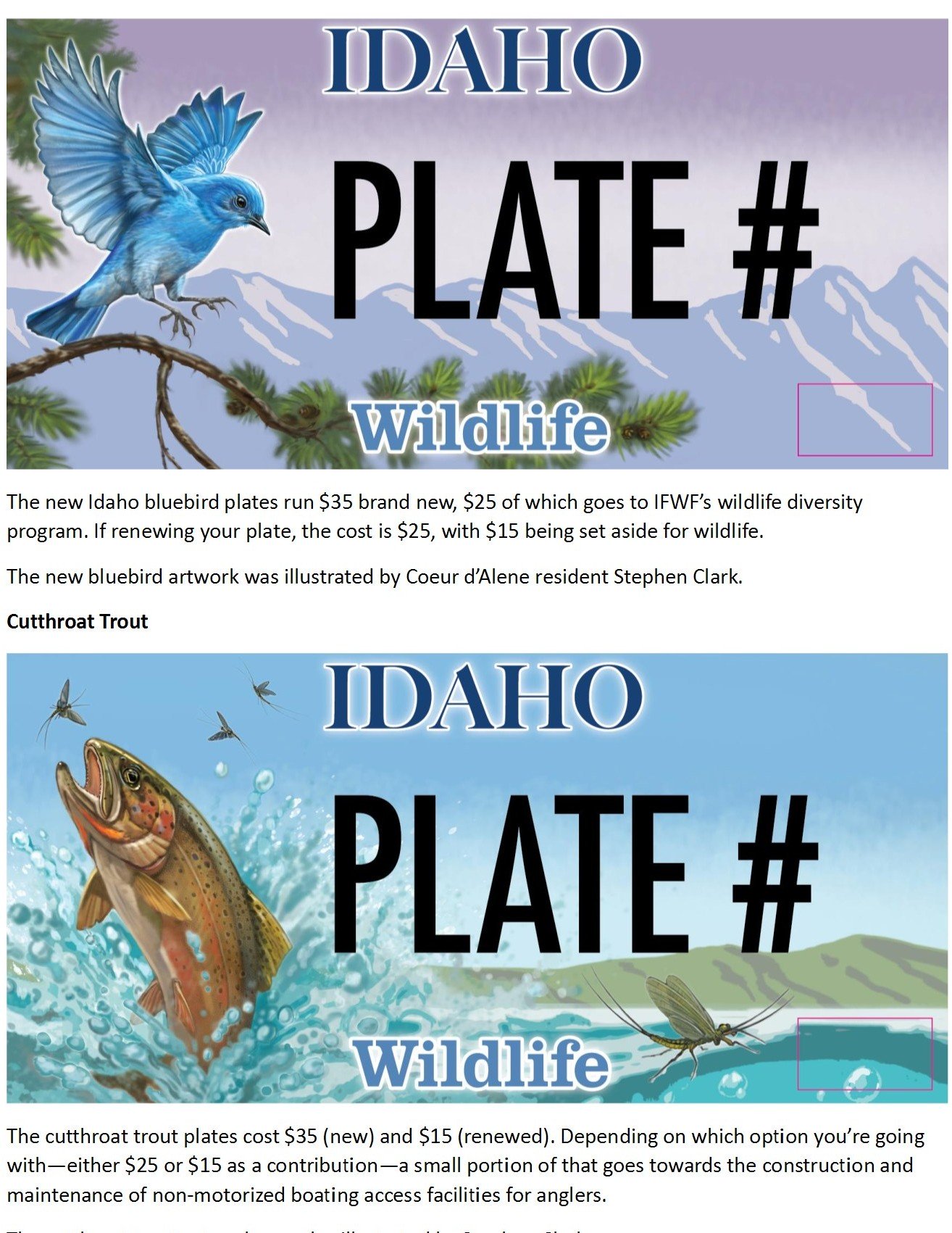
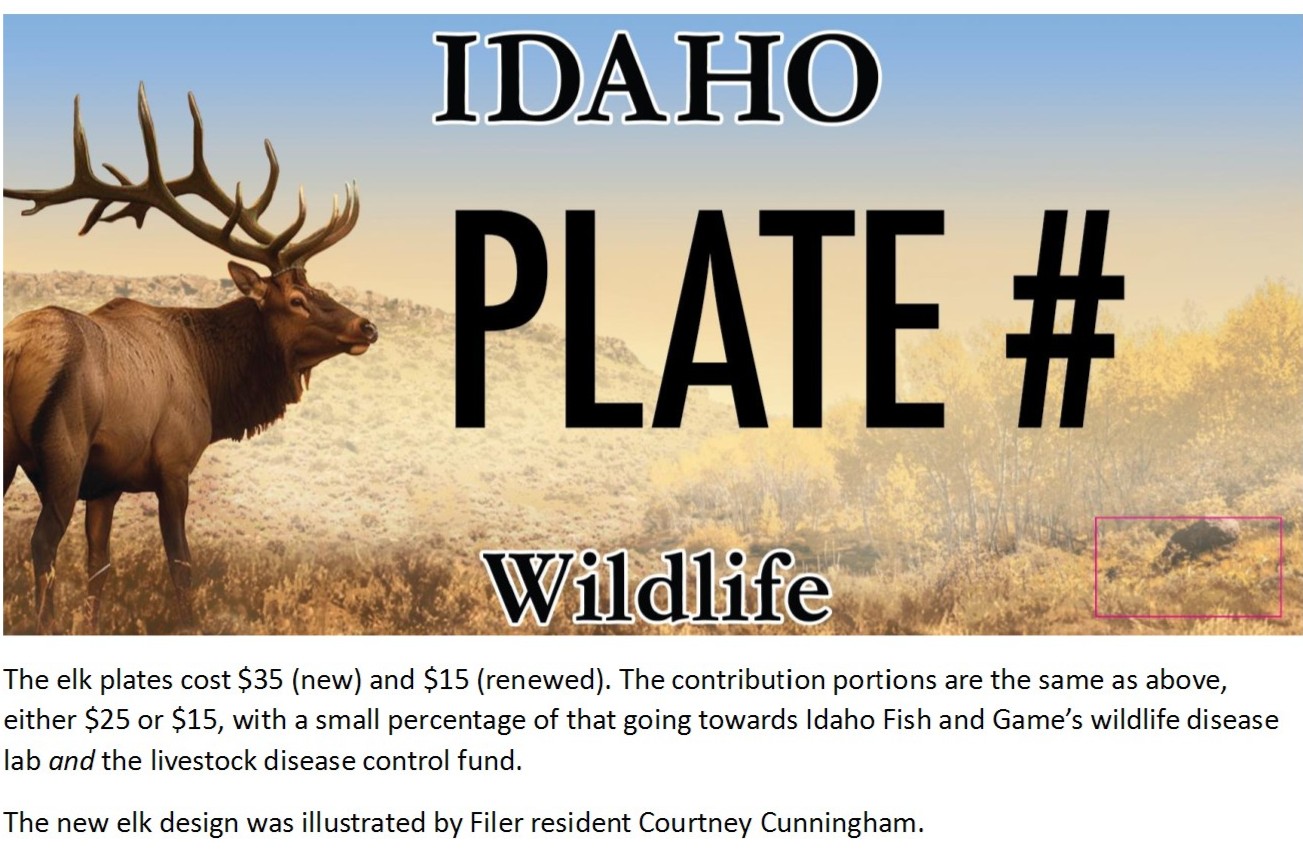
Great news! as of 2024, there are three NEW designs for license plates. They still are bluebird, cutthroat trout and elk, but they are beautiful.
Idaho Wildlife license plates provide essential funding that benefits the great diversity of native plants and wildlife that are not hunted, fished or trapped—over 10,000 species or 98% of Idaho’s species diversity. Game species that share the same habitats (such as elk, deer, antelope, sage-grouse, salmon, trout) also benefit from these specialty plates.
No state tax dollars are provided for wildlife diversity, conservation education and recreation programs. Neither are any revenues from the sale of hunting or fishing licenses spent on nongame species. Instead, these species depend on direct donations, federal grants, fundraising initiatives—and the Idaho Wildlife license plates.
Both my vehicles have Bluebird Plates. I prefer the bluebird because the nongame program gets 70 percent of the money from bluebird plates, but only 60 percent of the money from elk and trout plates - 10 percent of the money from elk plates supports wildlife disease monitoring and testing programs (to benefit the livestock industry) and 10 percent from cutthroat plates supports non-motorized boat access.
Incidentally, in 2014, the Idaho Legislature denied the Department of Fish and Game the ability to add new plates or even to change the name of the elk and cutthroat plates (very specific) to wildlife and fish plates, a move that would have allowed for changing images occasionally and generating more revenue. It would seem that they believe that we Idahoans don't want a well funded wildlife program.
I think it is time we let the Legislature know that Idahoan support wildlife funding and that we would like to see these generic plates come to fruition.
"WOW. What a phenomenal piece you wrote. You are amazing." Jennifer Jackson
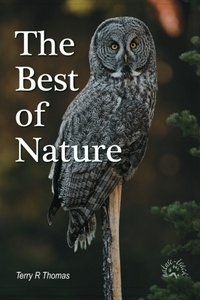
That is embarrassing, but actually a fairly typical response to my nature essays. Since The Best of Nature is created from the very best of 16 years of these nature essays published weekly in the Idaho Falls Post Register (online readership 70,000), it is a fine read. It covers a wide variety of topics including humorous glimpses of nature, philosophy, natural history, and conservation. Readers praise the style, breadth of subject matter and my ability to communicate complex and emotional topics in a relaxed and understandable manner.
Everyone can find something to love in this book. From teenagers to octogenarians, from the coffee shop to the school room, these nature essays are widely read and enjoyed.
Some of the essays here are my personal favorites, others seemed to strike a chord with readers. Most have an important message or lesson that will resonate with you. They are written with a goal to simultaneously entertain and educate about the wonderful workings of nature. Some will make you laugh out loud and others will bring a tear to the eye and warm your heart.
Readers Write:
"You hit a home run with your article on, Big Questions in Nature. It should be required reading for everyone who has lost touch with nature...great job!" Joe Chapman
"We enjoyed your column, Bloom Where Planted. Some of the best writing yet. The Post Register is fortunate to have your weekly columns." Lou Griffin.
To read more and to order a copy, click here or get the Kindle version
Copies are also available at:
Post Register
Island Park Builders Supply (upstairs)
Barnes and Noble in Idaho Falls
Harriman State Park, Island Park
Museum of Idaho
Valley Books, Jackson Wyoming
Avocet Corner Bookstore, Bear River National Wildlife Refuge, Brigham City, Utah
Craters of the Moon National Monument Bookstore, Arco, Idaho