Outhouses

©Terry R. Thomas/www.nature-track.com
Ever wonder what those black pipes on outhouses are for? They are very important in odor management.
NASA’s Artemis II mission has carried astronauts outside the influence of the Earth’s orbit for the first time in over 50 years. Fifty years to get it right and the astronauts have still been forced to pee in bags when their multi-million-dollar toilet failed (it still handled the solid waste). It appears that urine in one of the lines froze and NASA had to reconfigure the orientation of the spacecraft (Orion) to place the frozen side toward the sun so it could thaw. It now works intermittently.
That makes me appreciate the simple system of a vault toilet, the kind I have been visiting for the last week in Bog Springs campground in Madera Canyon, Arizona. These toilets don’t freeze or clog, although they do eventually fill up, and no matter whether the sun is shining or not, they work.
They do remind me of the opposite in toilets that we encountered at a resort in Bali, Indonesia, one time. I kid you not, these toilets had an entire control panel. You want a warm seat? There was a button for it. How about a right side, left side, or middle bidet? No problem. Vibration? Of course. Of the more than dozen buttons though, it was a challenge to figure out how to flush it.
My most memorable toilet though, was in the saddle between Middle and Grand Teton peaks. This was an open air toilet with no walls and likely has the finest view that you can have while doing your business.
Outhouses, often called vault toilets because of the large underground tank that contains the waste until it can be removed, for all their simplicity, have a significant drawback. They can stink. I have been in a few that were so bad that it seemed I could cut the air with a knife. I tried to hold my breath while doing my business, but that of course, didn’t work well and when I ran out of air, I sucked in a deep breath of the foul-smelling stuff.
Are outhouses destined to smell? Not really. I recall several in Yellowstone, the Soda Butte outhouse in Lamar Valley, for instance, that are some of the sweetest smelling outhouses I have ever used. This is due in part to the nice air fresheners that the Park Service puts in there. They cover up some odor, but in a really stinky outhouse, sometimes the mix is obnoxious so they aren’t a perfect solution.
For years, part of my job was to oversee the Idaho Fish and Game’s fishing access program in the Upper Snake Region. I learned more about outhouses during my tenure than I ever thought I would know or even want to know. I found out that they were expensive, at the time between $10-15,000 each for a pre-built concrete one (still cheap compared to the $26 million to develop the space toilet). I learned that there is a small contingent of people who delighted in making outhouses unfit for humans until they were pressure washed (use your imagination). I also learned that there is a science to outhouses, and if everything is done properly, they don’t have to turn your stomach when you open the door.
Have you ever noticed the large black pipes that are on the back of every modern outhouse? These tubes are the engine for a passive system to vent an outhouse. It works this way: as the sun heats up the tubes, air inside begins to rise. As the air exits the tube, it is pulling air from the vault, creating a downdraft inside the toilet. This vents the stinky air out the pipes and not into the throne room. There is a catch though—if someone leaves the lid up or the door open, there is not enough pressure to properly vent the vault and the odor goes up and out the toilet, stinking up the entire outhouse. That is why you always see signs reminding you to close the lid and the door. It isn’t just civility or good manners; it is so the system will work.
If I never had to smell another stinky outhouse, it would be great. However, that is going to depend upon all of us doing two simple things—putting down the lid and closing the door. That shouldn’t be too much to ask.
Help Idaho Wildlife
When we traveled across the state in October 2017, we visited most of the Idaho Department of Fish and Game wildlife management areas. Most of the vehicles we saw using the wildlife management areas did not have wildlife plates. Buying wildlife plates is a great way for non-hunters and hunters alike to support wildlife-based recreation like birding.
C'mon folks, let's help Idaho's wildlife by proudly buying and displaying a wildlife license plate on each of our vehicles!
See below for information on Idaho plates. Most states have wildlife plates so if you live outside Idaho, check with your state's wildlife department or vehicle licensing division for availability of state wildlife plates where you live.
And tell them that you heard about it from Nature-track.com!
Wildlife License Plates
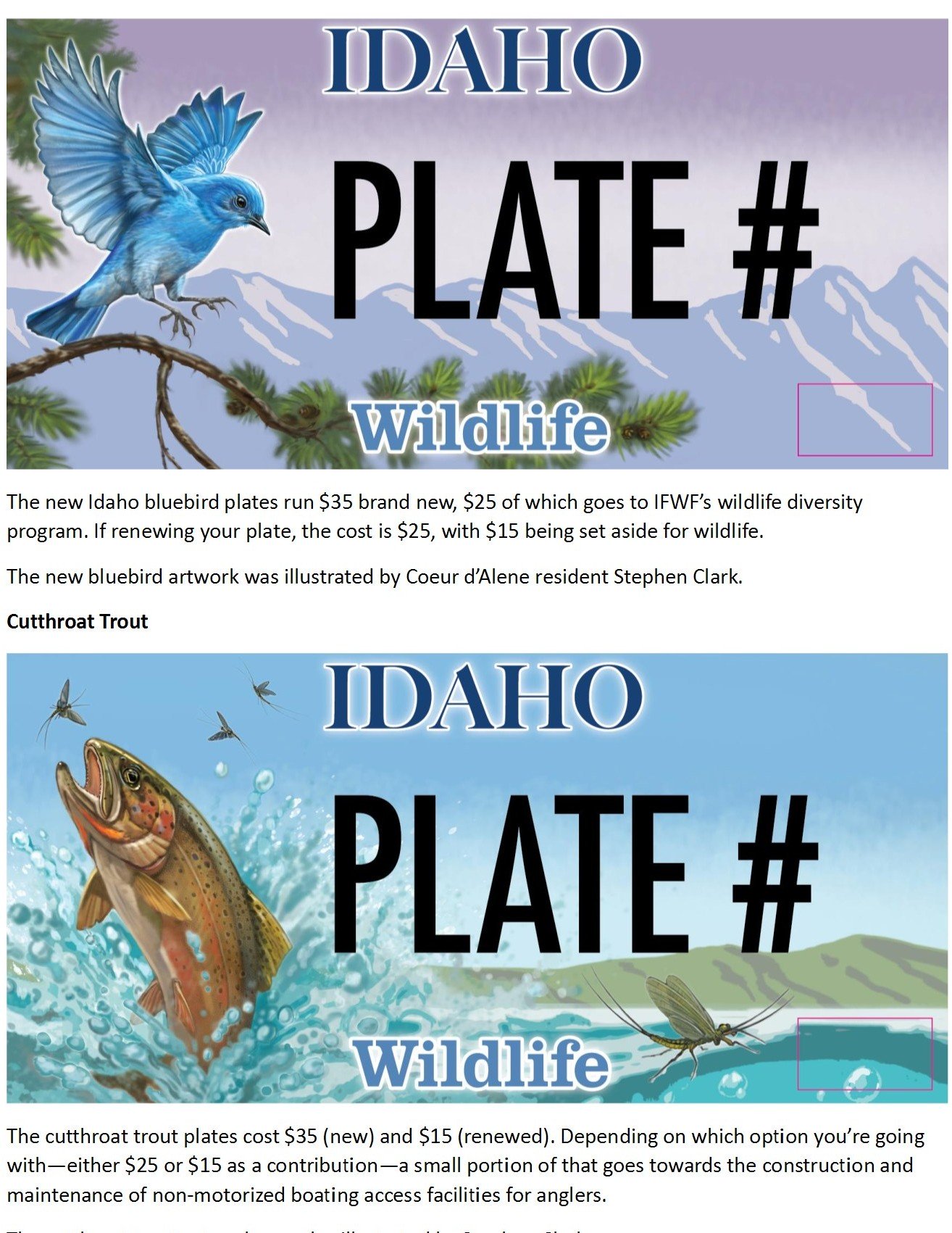
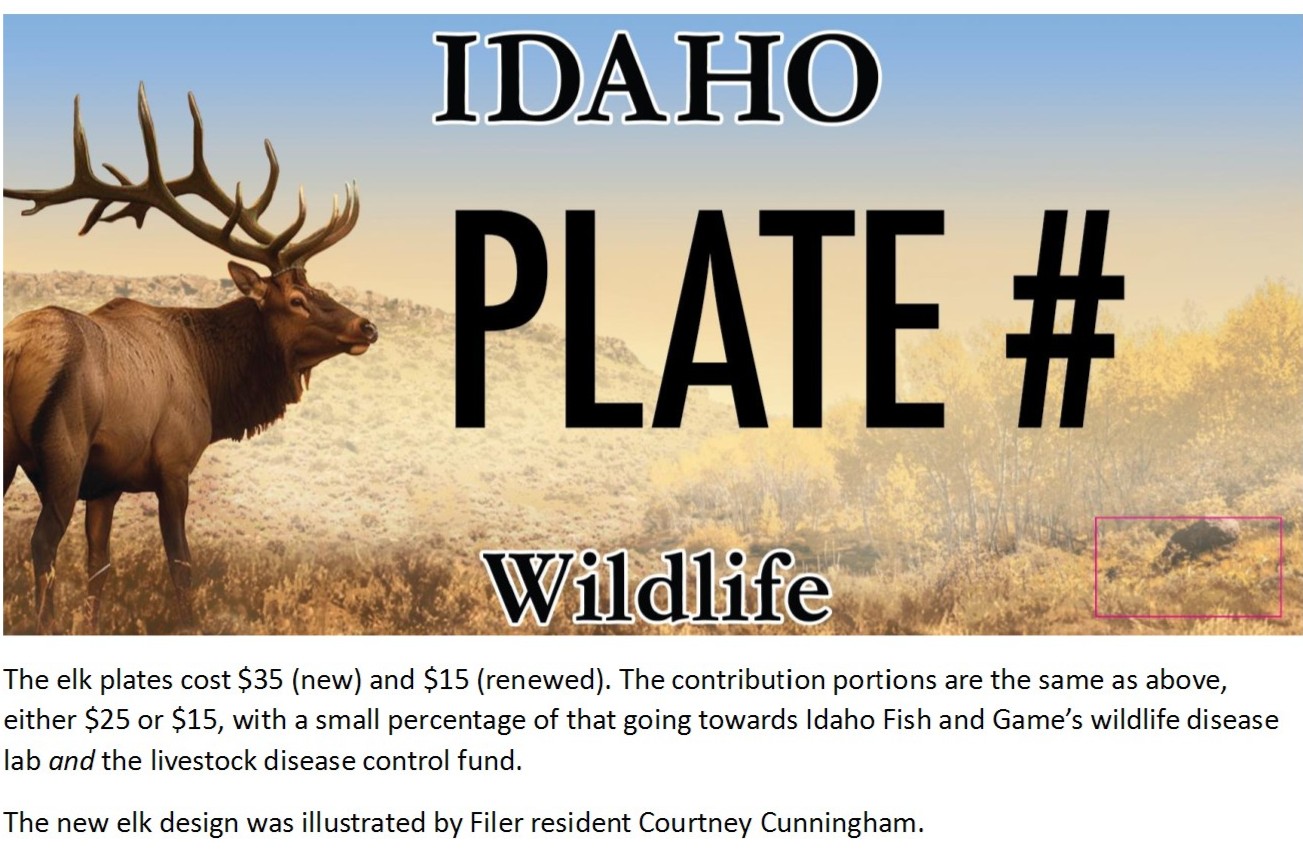
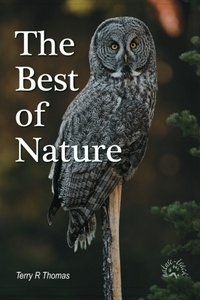
Great news! as of 2024, there are three NEW designs for license plates. They still are bluebird, cutthroat trout and elk, but they are beautiful.
Idaho Wildlife license plates provide essential funding that benefits the great diversity of native plants and wildlife that are not hunted, fished or trapped—over 10,000 species or 98% of Idaho’s species diversity. Game species that share the same habitats (such as elk, deer, antelope, sage-grouse, salmon, trout) also benefit from these specialty plates.
No state tax dollars are provided for wildlife diversity, conservation education and recreation programs. Neither are any revenues from the sale of hunting or fishing licenses spent on nongame species. Instead, these species depend on direct donations, federal grants, fundraising initiatives—and the Idaho Wildlife license plates.
Both my vehicles have Bluebird Plates. I prefer the bluebird because the nongame program gets 70 percent of the money from bluebird plates, but only 60 percent of the money from elk and trout plates - 10 percent of the money from elk plates supports wildlife disease monitoring and testing programs (to benefit the livestock industry) and 10 percent from cutthroat plates supports non-motorized boat access.
Incidentally, in 2014, the Idaho Legislature denied the Department of Fish and Game the ability to add new plates or even to change the name of the elk and cutthroat plates (very specific) to wildlife and fish plates, a move that would have allowed for changing images occasionally and generating more revenue. It would seem that they believe that we Idahoans don't want a well funded wildlife program.
I think it is time we let the Legislature know that Idahoan support wildlife funding and that we would like to see these generic plates come to fruition.
"WOW. What a phenomenal piece you wrote. You are amazing." Jennifer Jackson
That is embarrassing, but actually a fairly typical response to my nature essays. Since The Best of Nature is created from the very best of 16 years of these nature essays published weekly in the Idaho Falls Post Register (online readership 70,000), it is a fine read. It covers a wide variety of topics including humorous glimpses of nature, philosophy, natural history, and conservation. Readers praise the style, breadth of subject matter and my ability to communicate complex and emotional topics in a relaxed and understandable manner.
Everyone can find something to love in this book. From teenagers to octogenarians, from the coffee shop to the school room, these nature essays are widely read and enjoyed.
Some of the essays here are my personal favorites, others seemed to strike a chord with readers. Most have an important message or lesson that will resonate with you. They are written with a goal to simultaneously entertain and educate about the wonderful workings of nature. Some will make you laugh out loud and others will bring a tear to the eye and warm your heart.
Readers Write:
"You hit a home run with your article on, Big Questions in Nature. It should be required reading for everyone who has lost touch with nature...great job!" Joe Chapman
"We enjoyed your column, Bloom Where Planted. Some of the best writing yet. The Post Register is fortunate to have your weekly columns." Lou Griffin.
To read more and to order a copy, click here or get the Kindle version
Copies are also available at:
Post Register
Island Park Builders Supply (upstairs)
Barnes and Noble in Idaho Falls
Harriman State Park, Island Park
Museum of Idaho
Valley Books, Jackson Wyoming
Avocet Corner Bookstore, Bear River National Wildlife Refuge, Brigham City, Utah
Craters of the Moon National Monument Bookstore, Arco, Idaho